


State of Async Work in 2026

Async work is about timing, not location. It means collaborating without expecting an immediate response, whether you're remote, hybrid, or in-office. Instead of real-time conversations, async work relies on written updates, shared up-to-date docs, and recordings that teammates can respond to in their own time.
But what do knowledge workers actually think about async? How do they spend their time? And is async work delivering on its promises to:
- Create more room for deep work
- Give people more control over their time
- Increase productivity and output
- Support a better work-life balance
To find out, we surveyed knowledge workers across different roles, company sizes, and work setups. Here's what we learned.
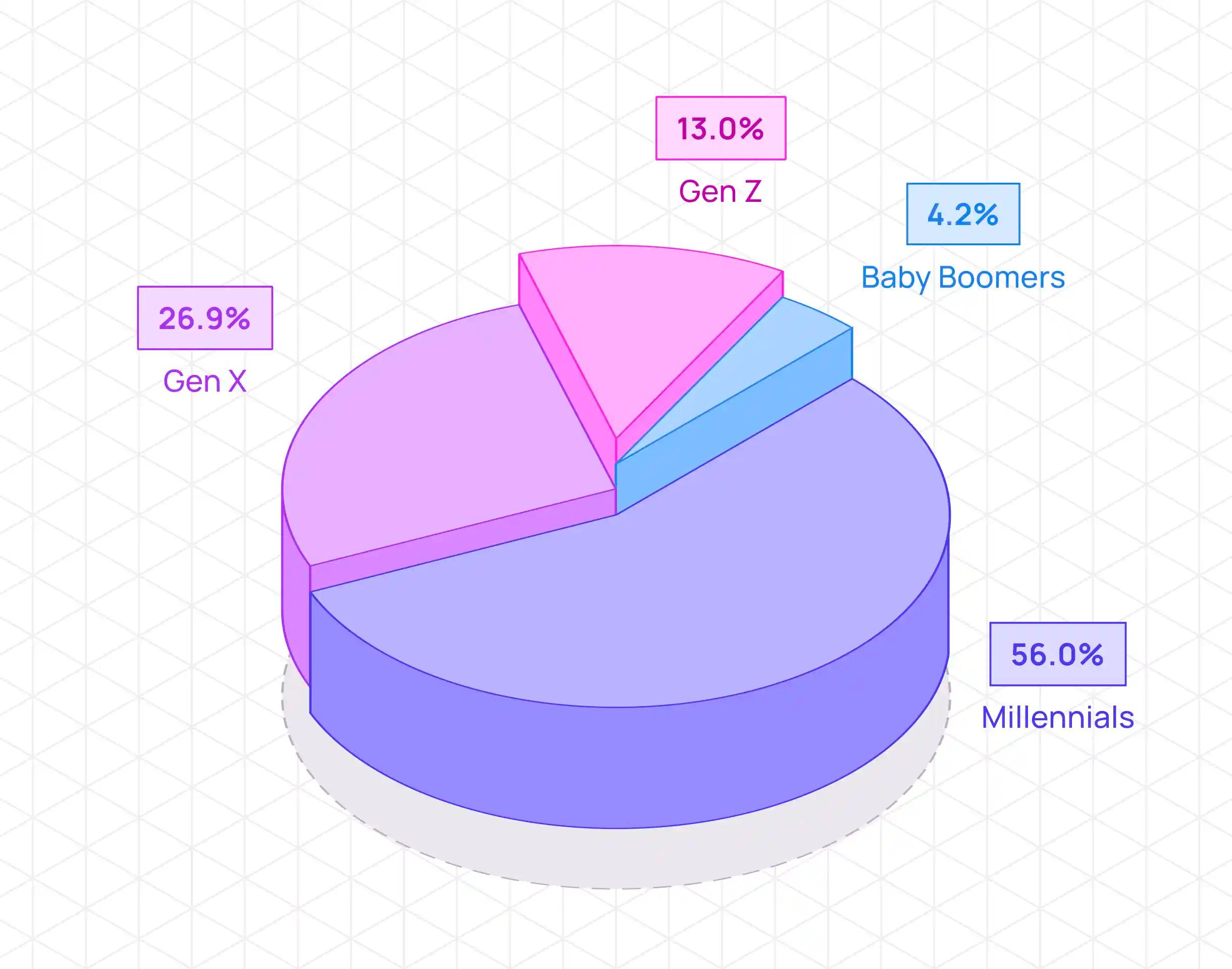
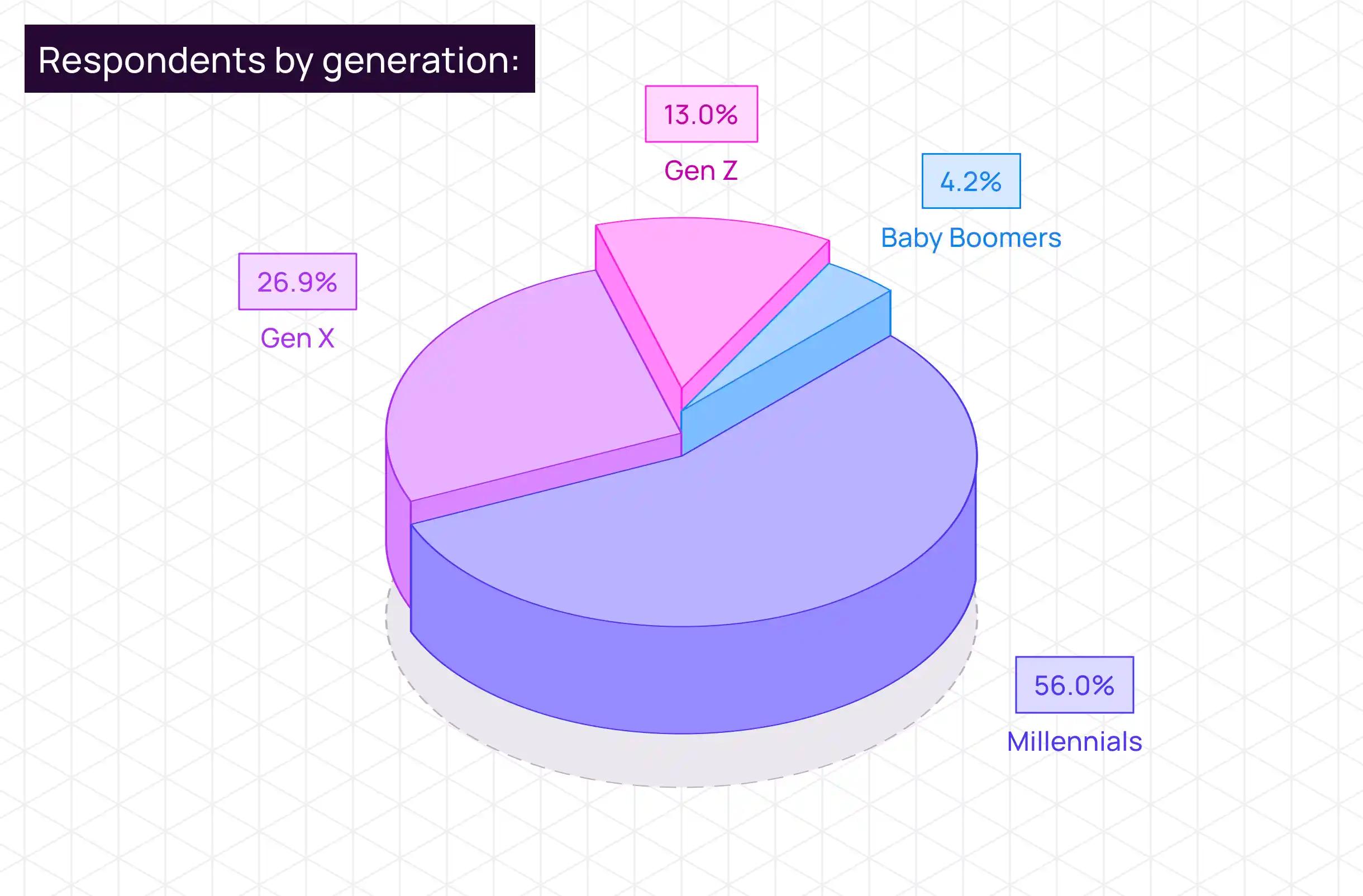
Who took this survey?
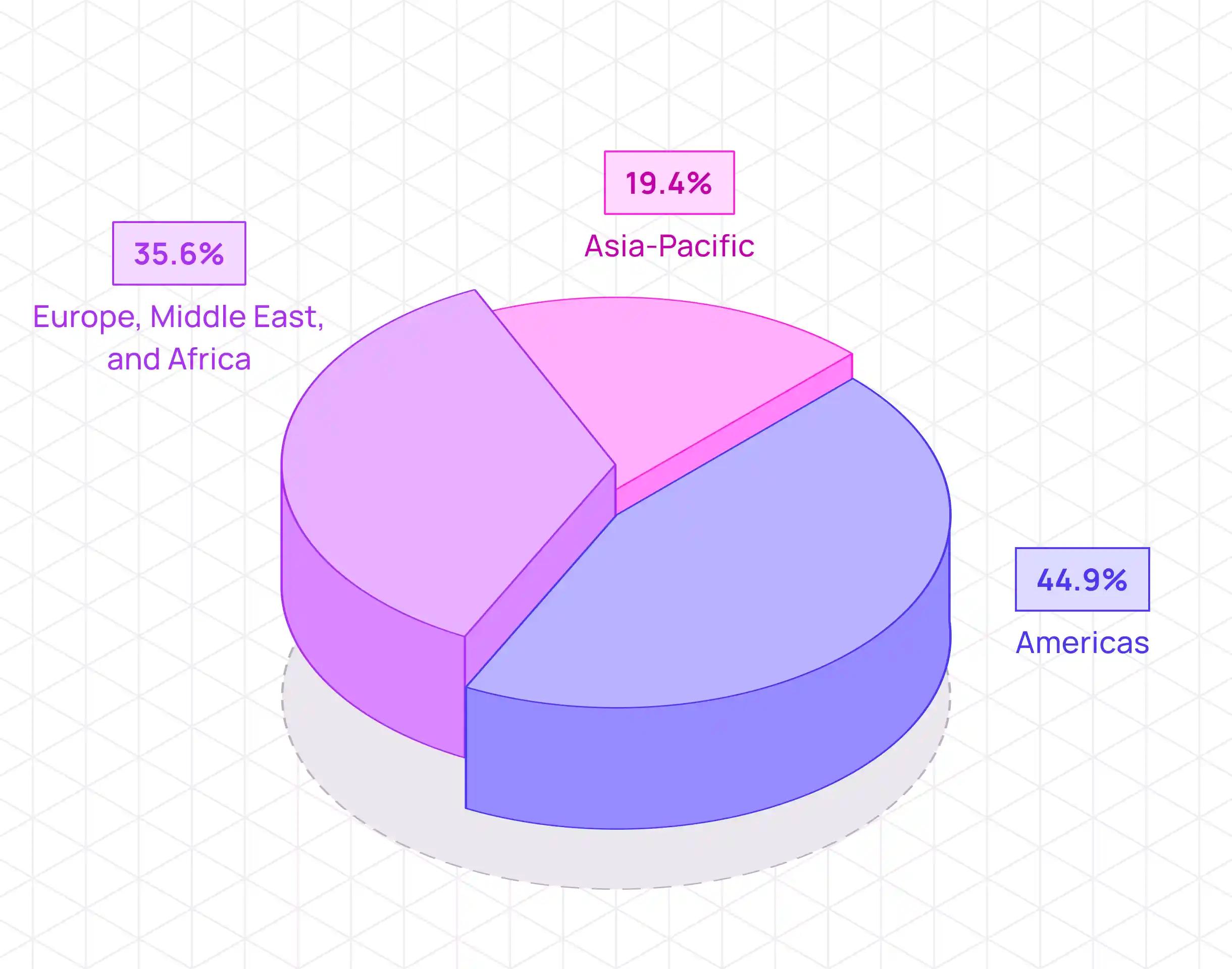
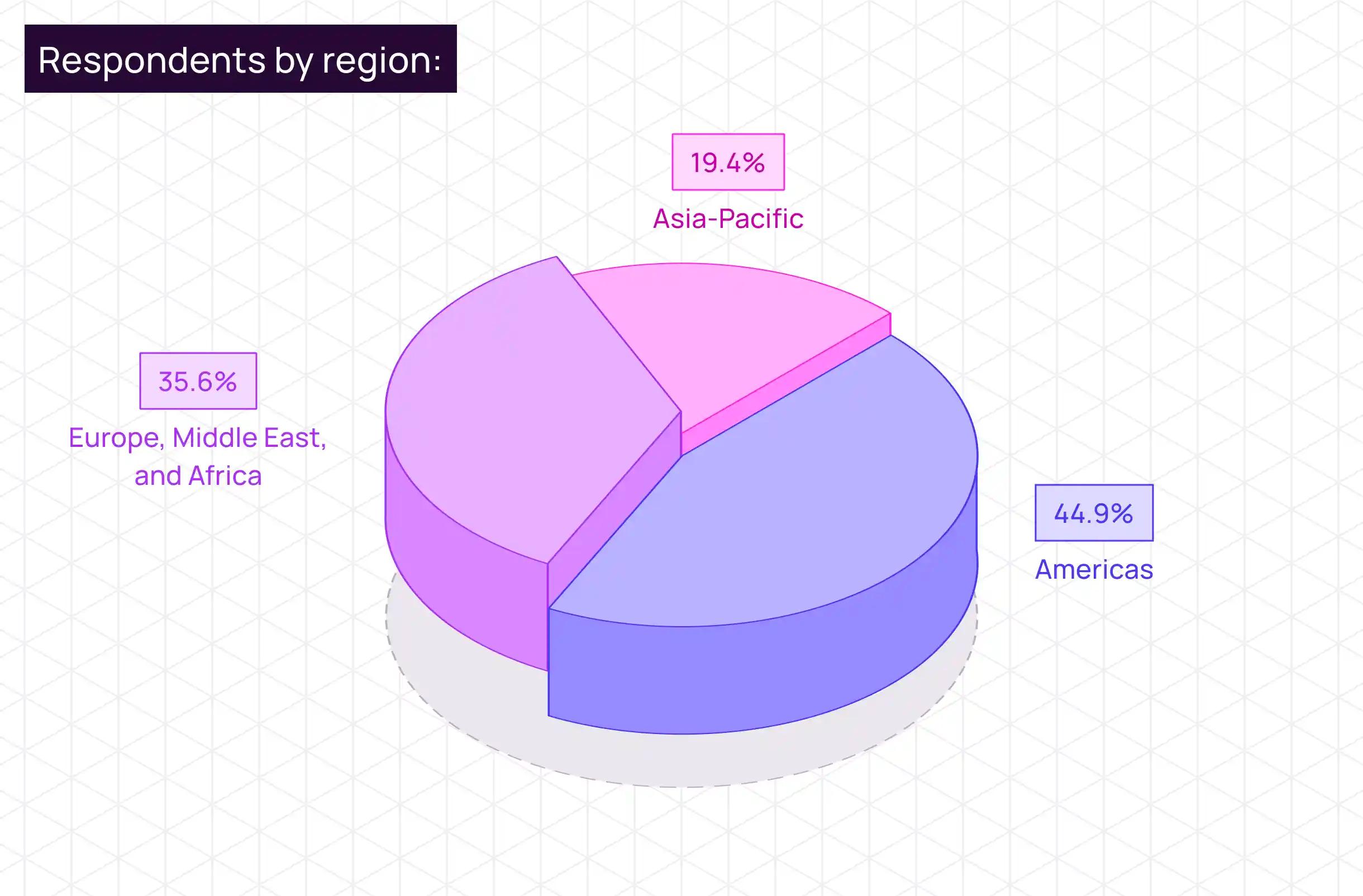
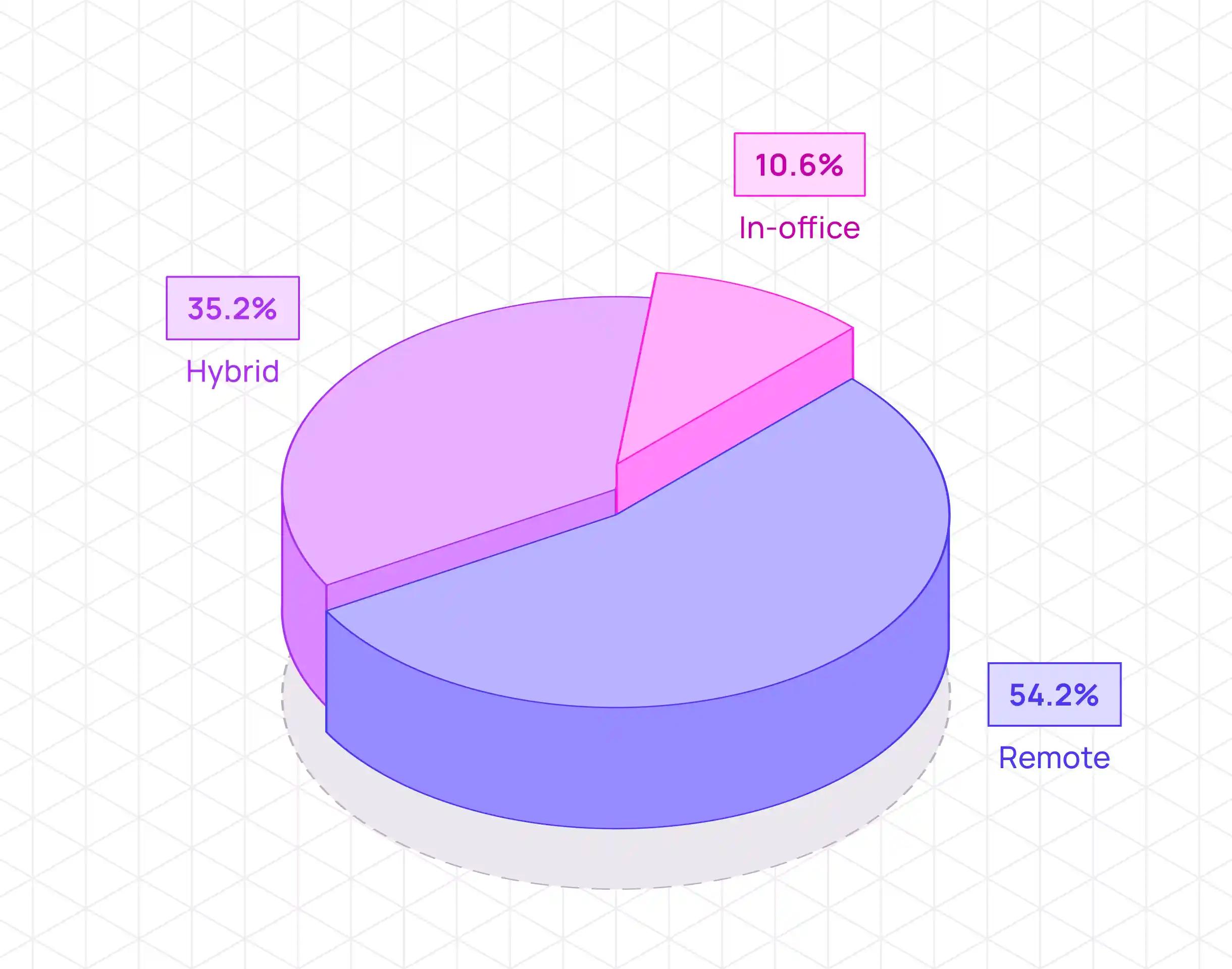
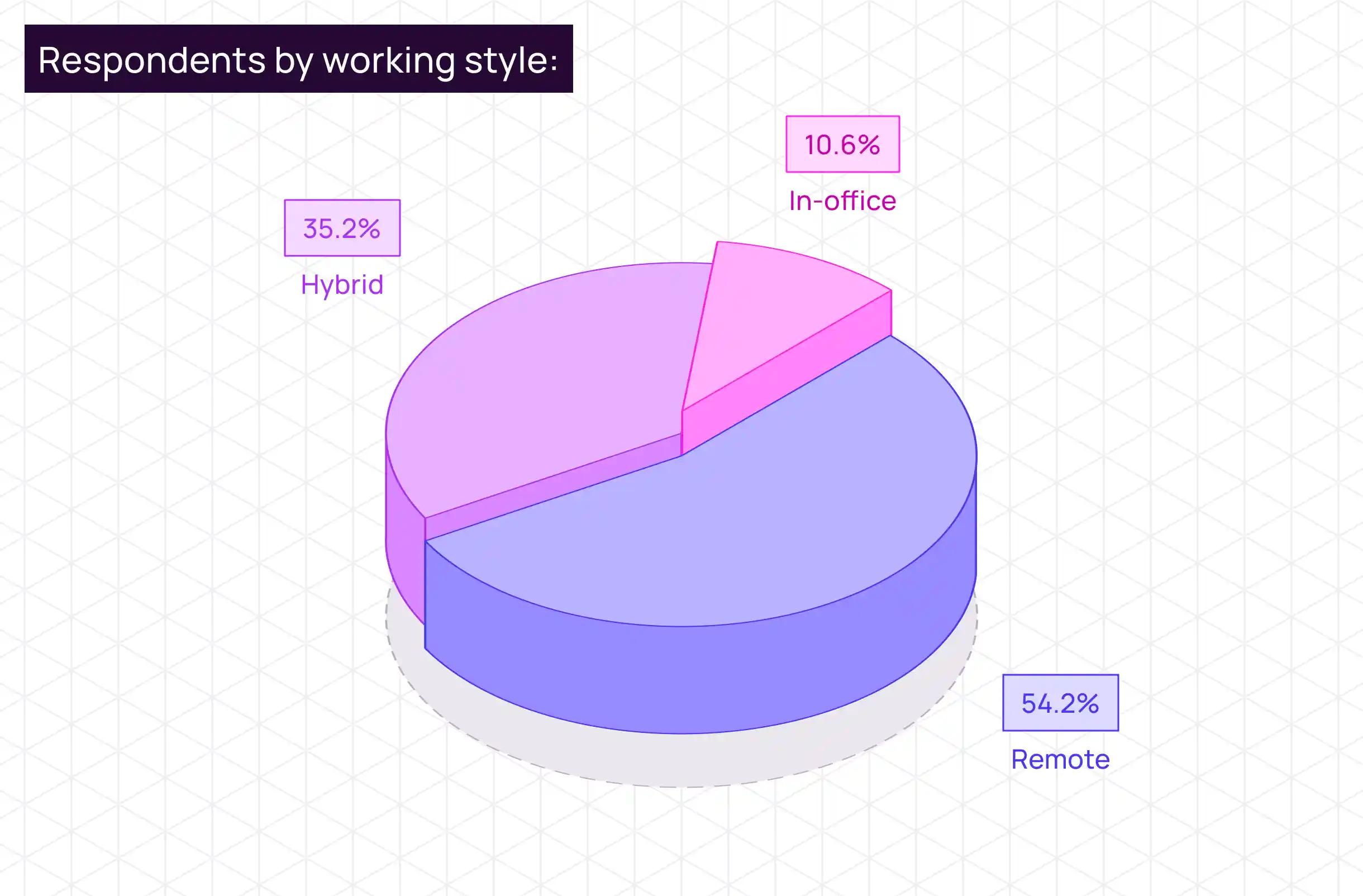
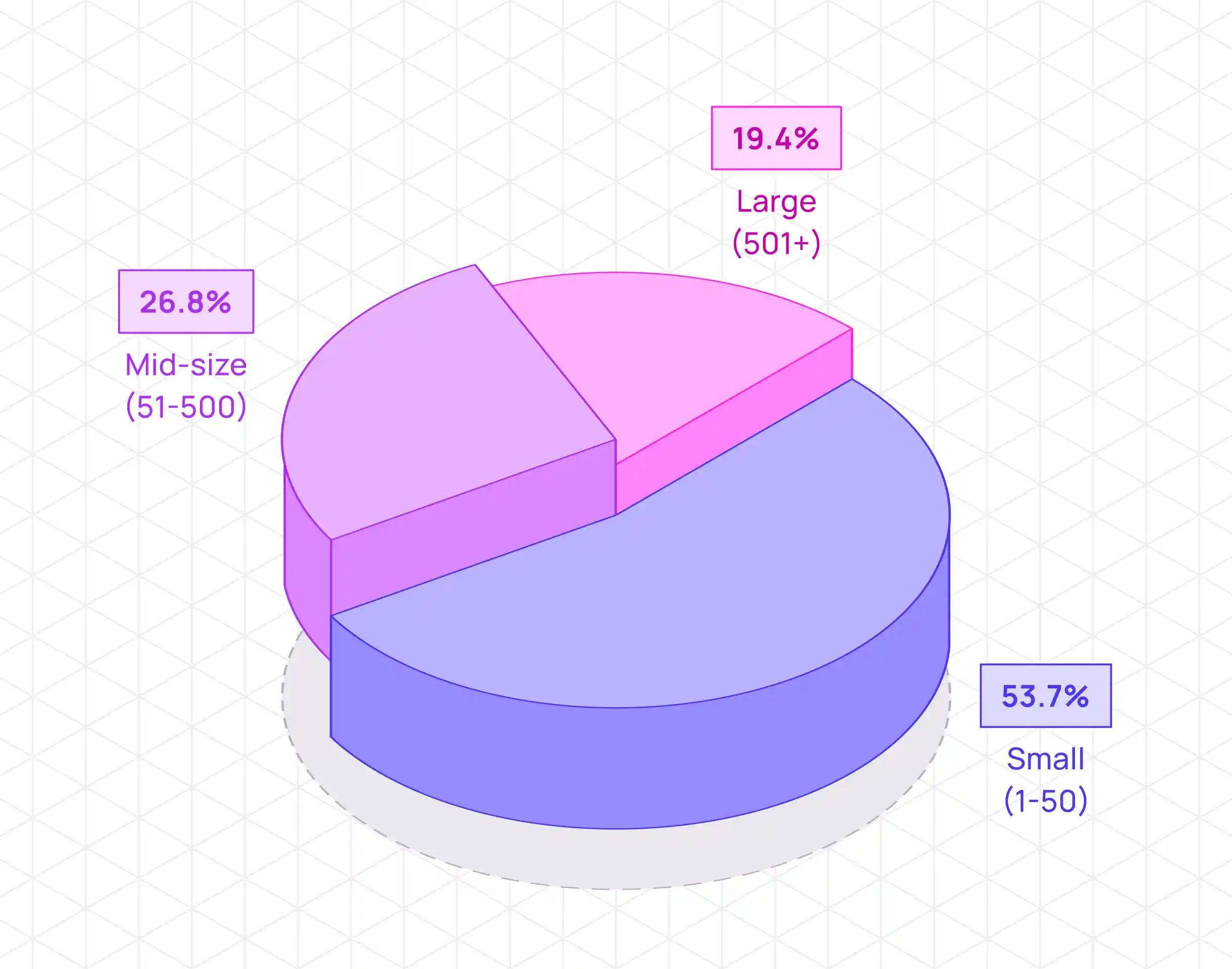
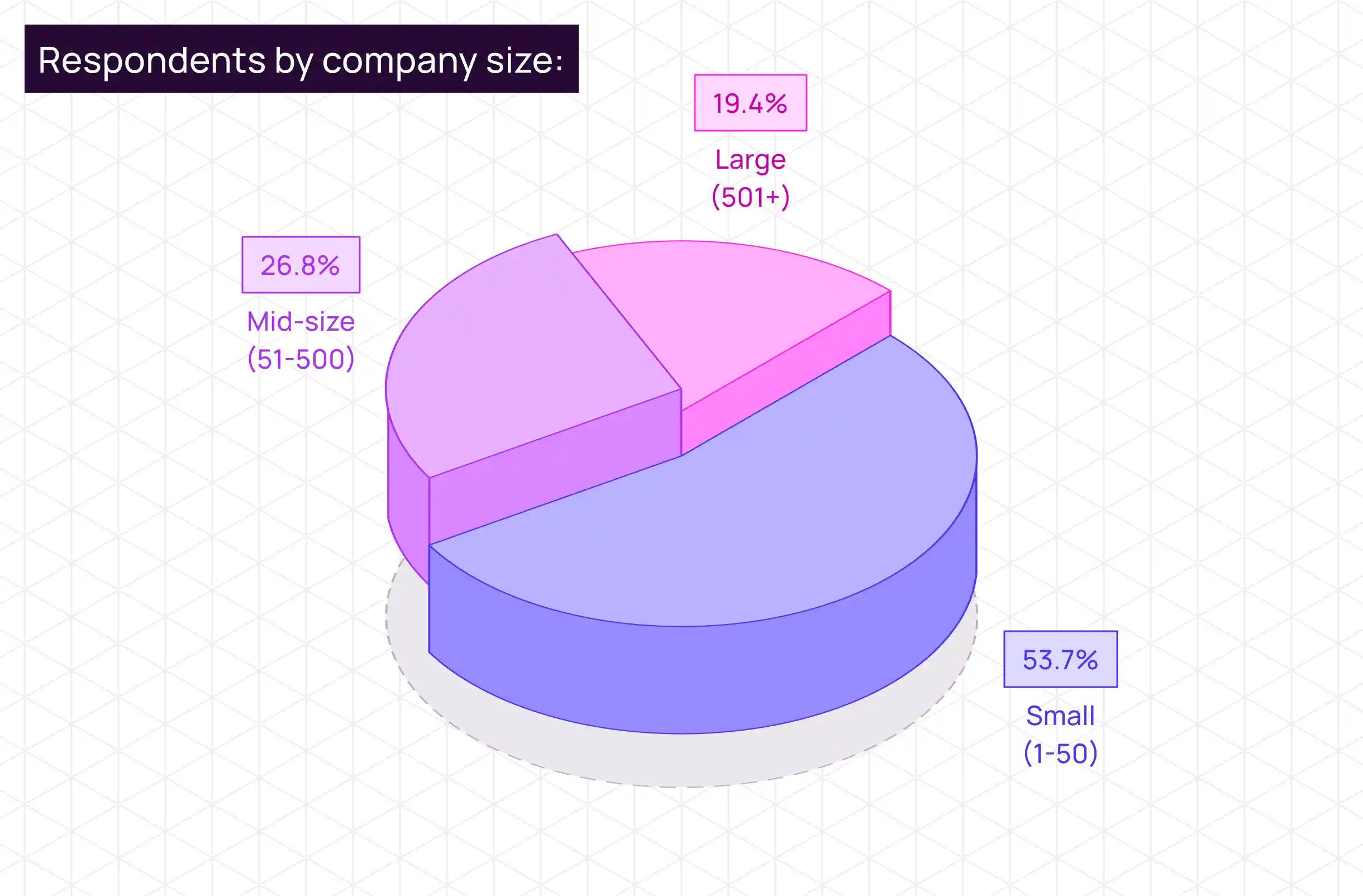
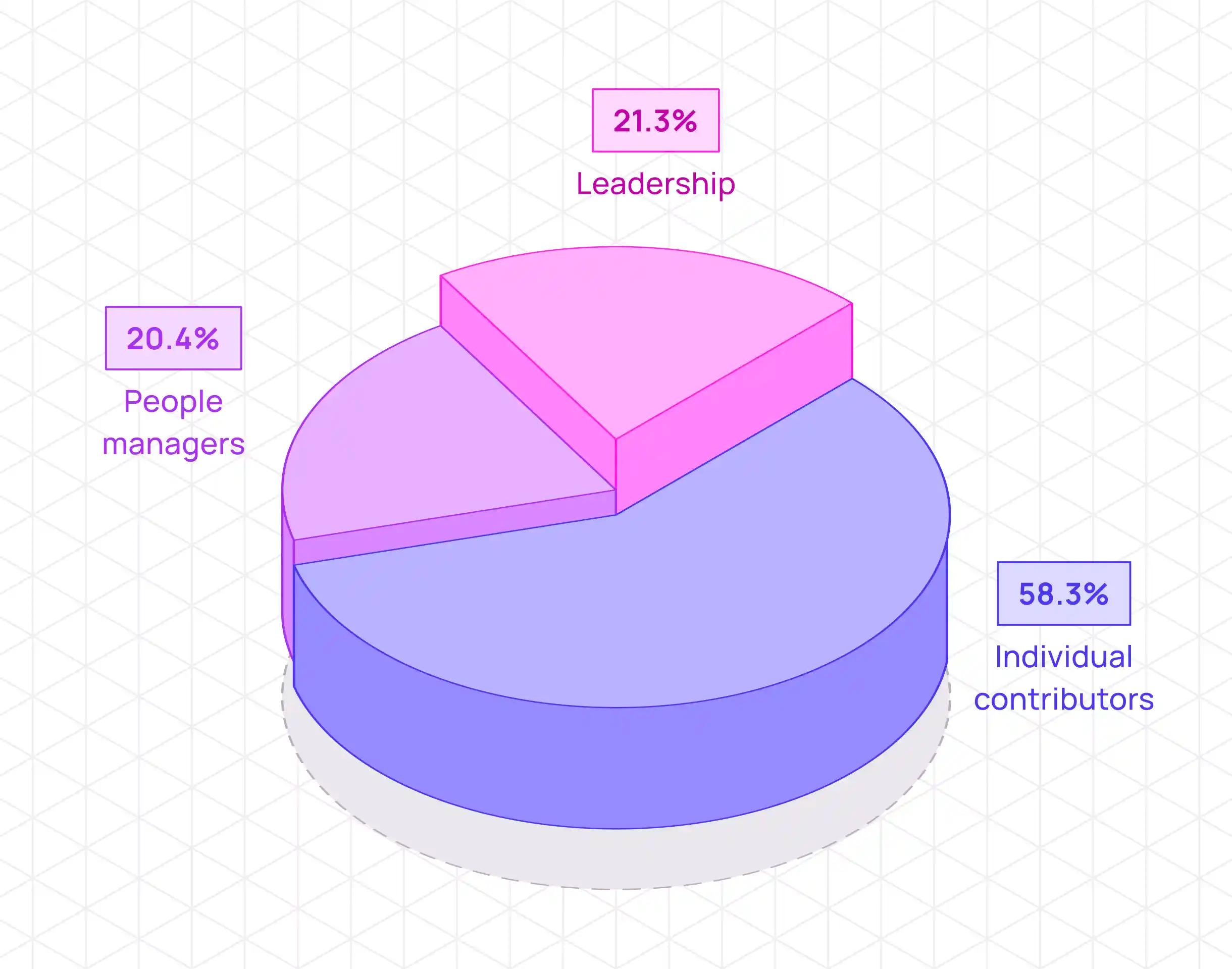
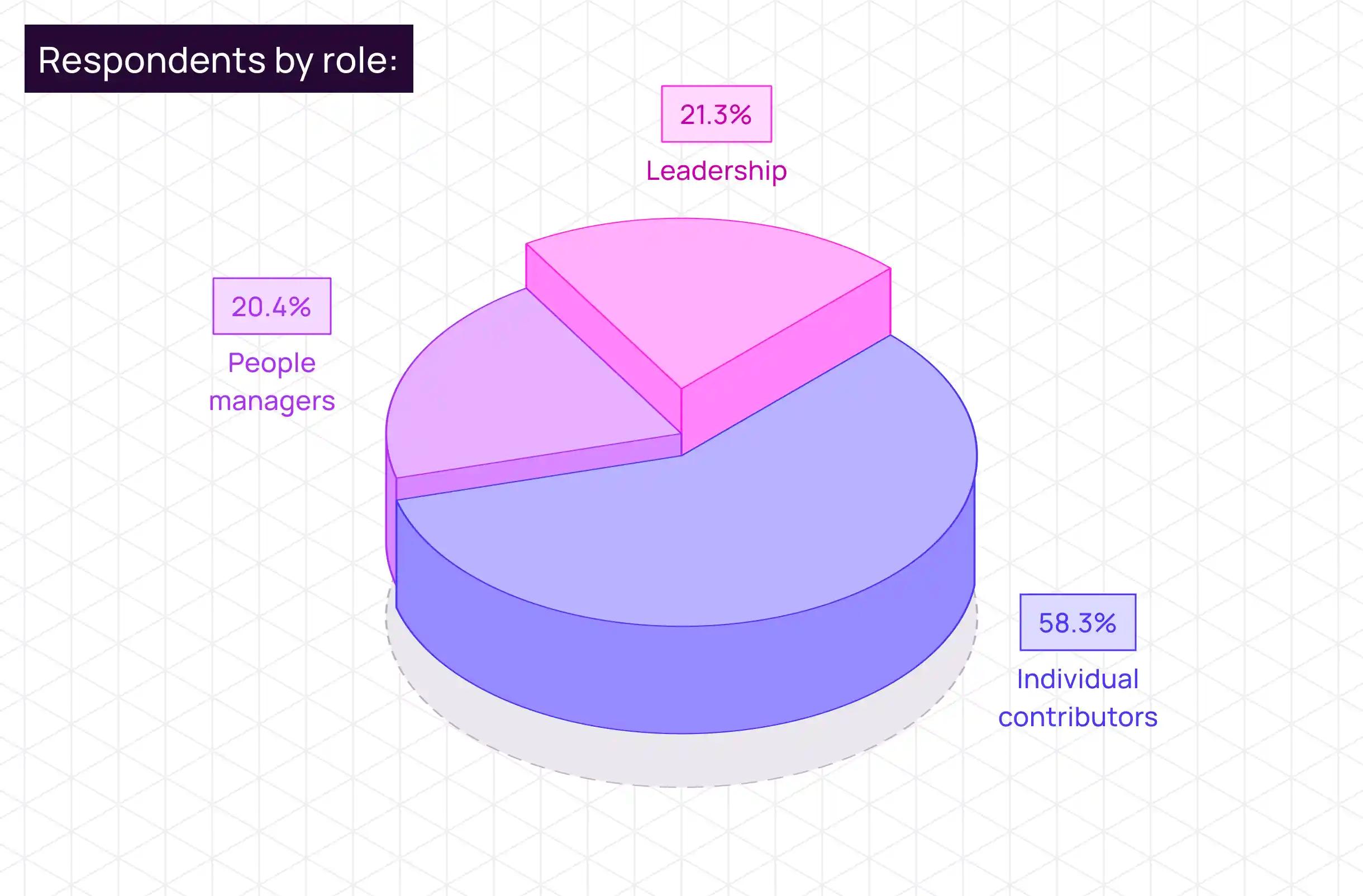
Insights:
- AMER leads in fully remote; APAC has more in-office.
- Millennials are most likely to work fully remote.
- In-office workers spend nearly twice as long in real-time collaboration as fully remote workers.
- ICs have the deepest focus time 34.7%.
- People managers spend the longest in real-time collaboration.
- Large companies have the highest level of real-time collaboration 43.4%.
52.8% of workers want more async, only 8.3% want less
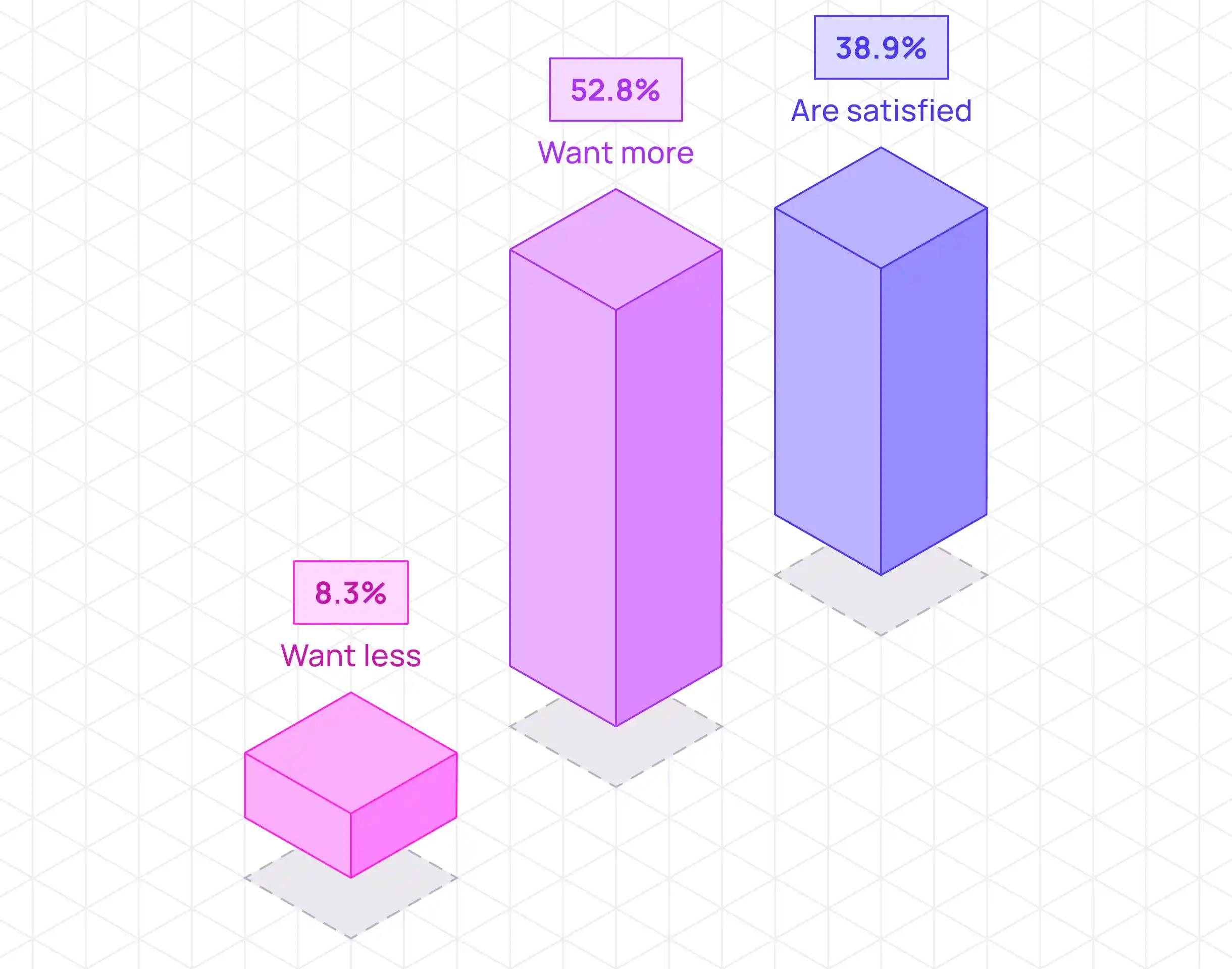
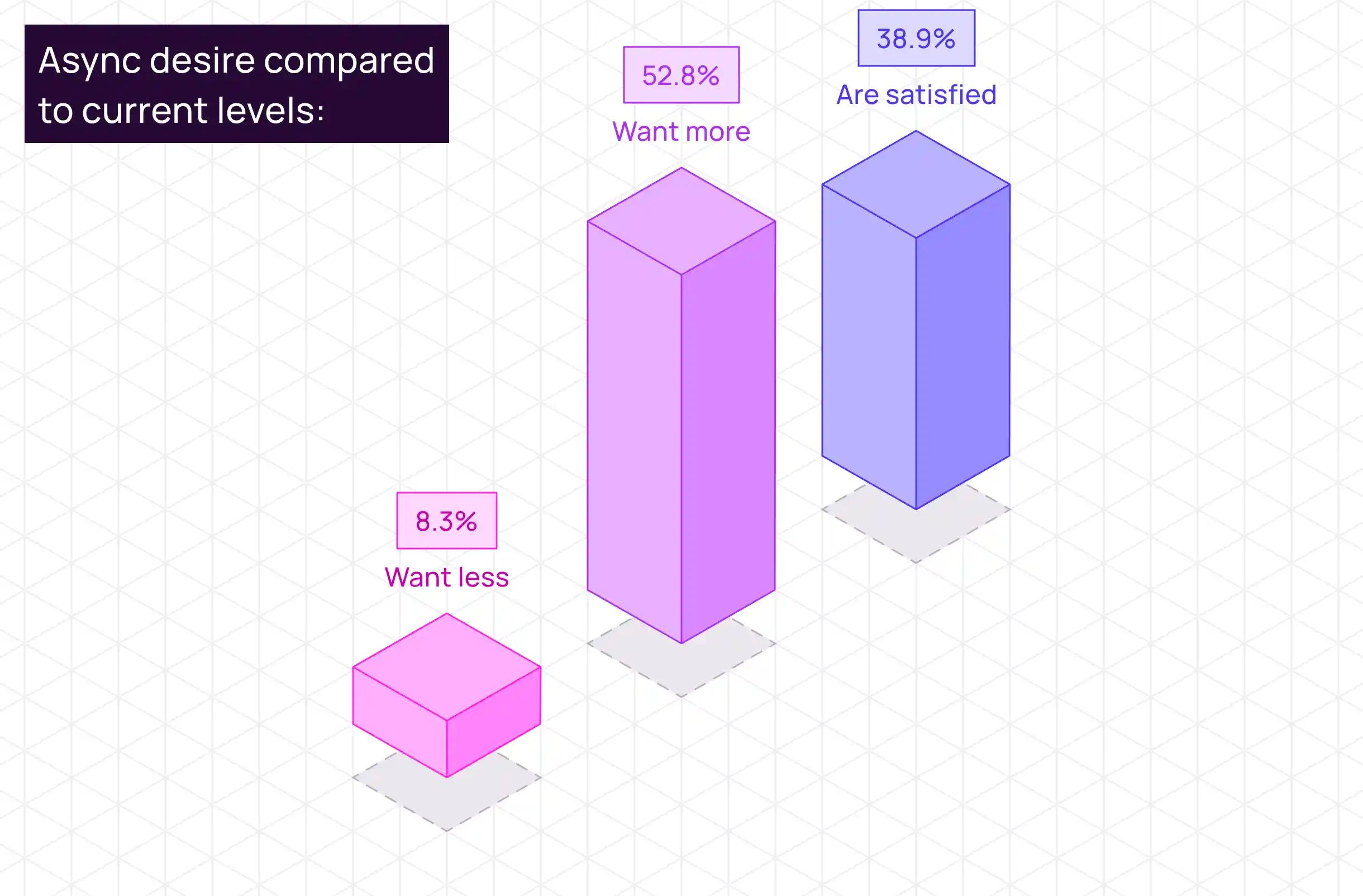
Almost no one wants less async work. For every one person who does, roughly six want more.
83% say async increases their productivity
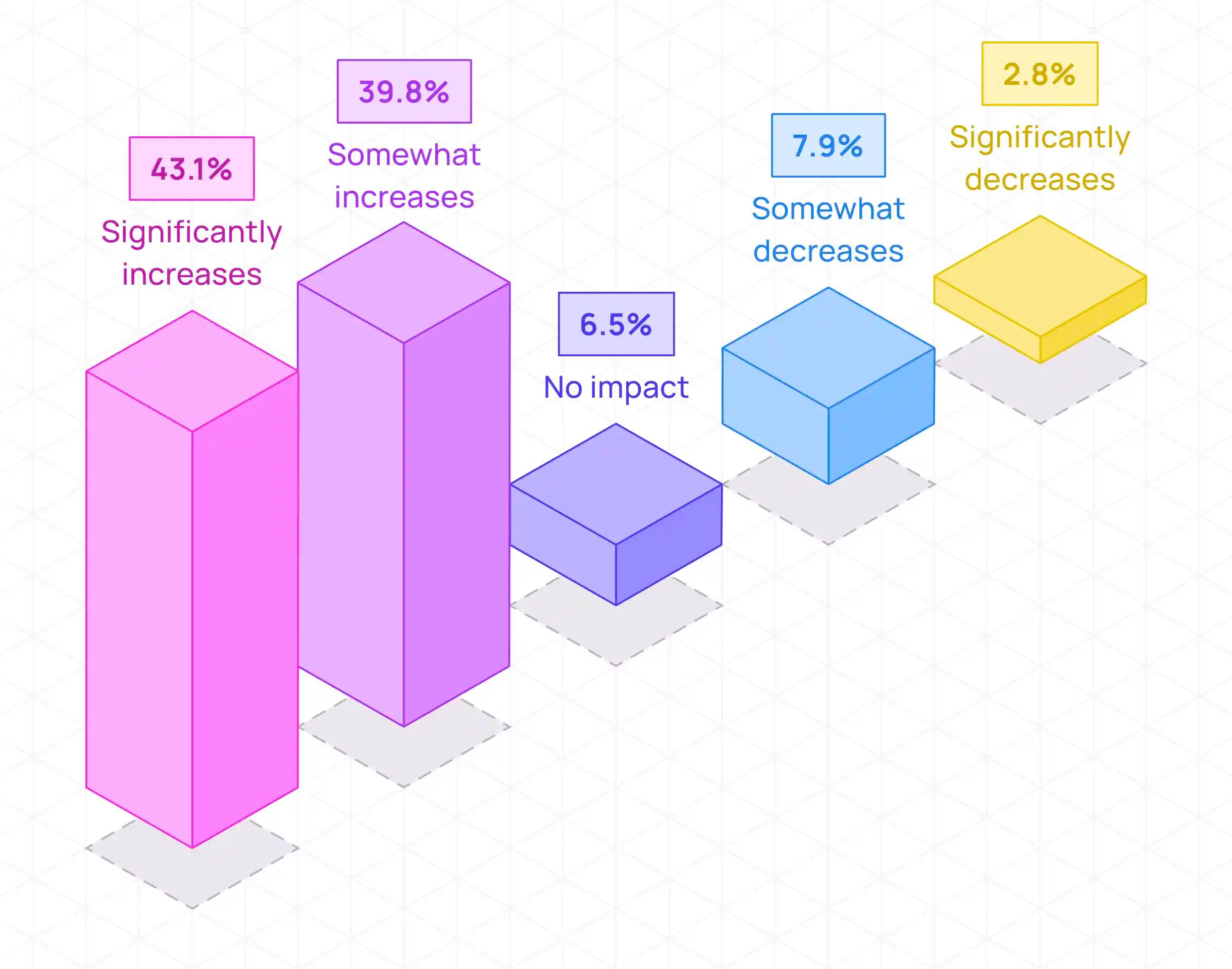
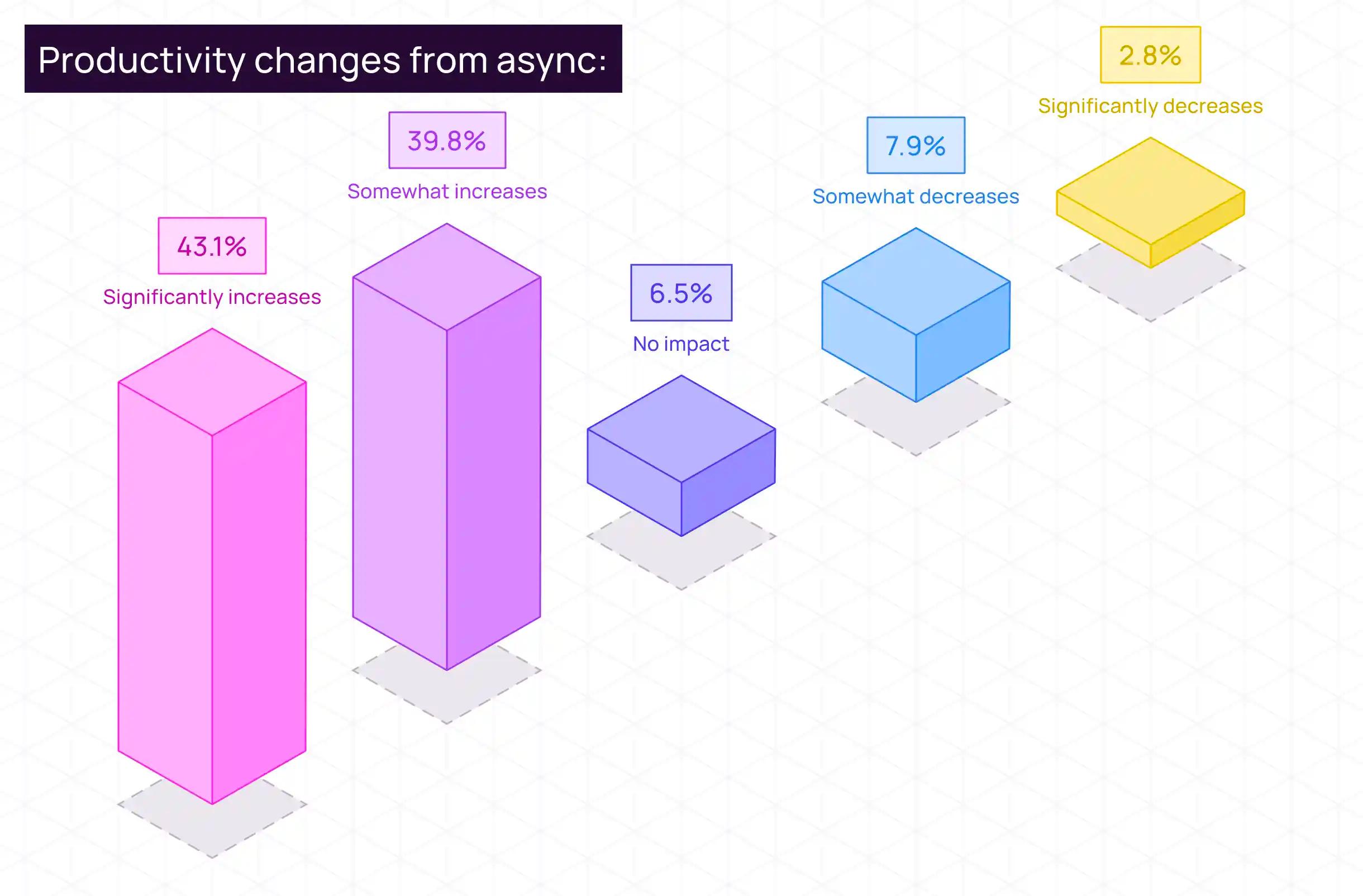
82.9% report productivity gains while only 10.6% report decreases. That's an 8:1 ratio. The small group that believes async hurts productivity is also the group that wants less of it. Baby boomers are three times more likely than other generations to believe async harms productivity. Similar concerns show up among people working in-office and at larger companies.
70% believe async supports better work-life balance
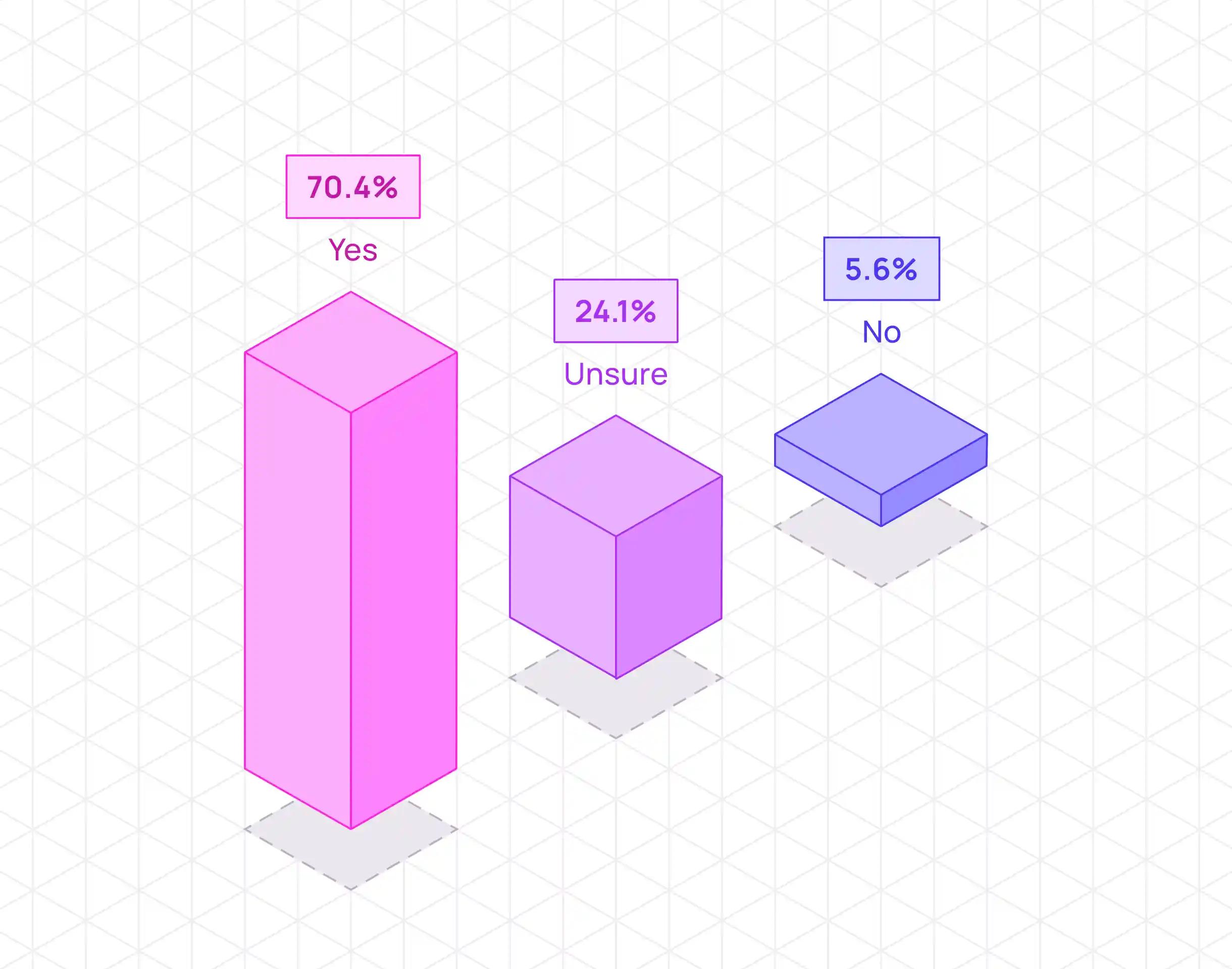
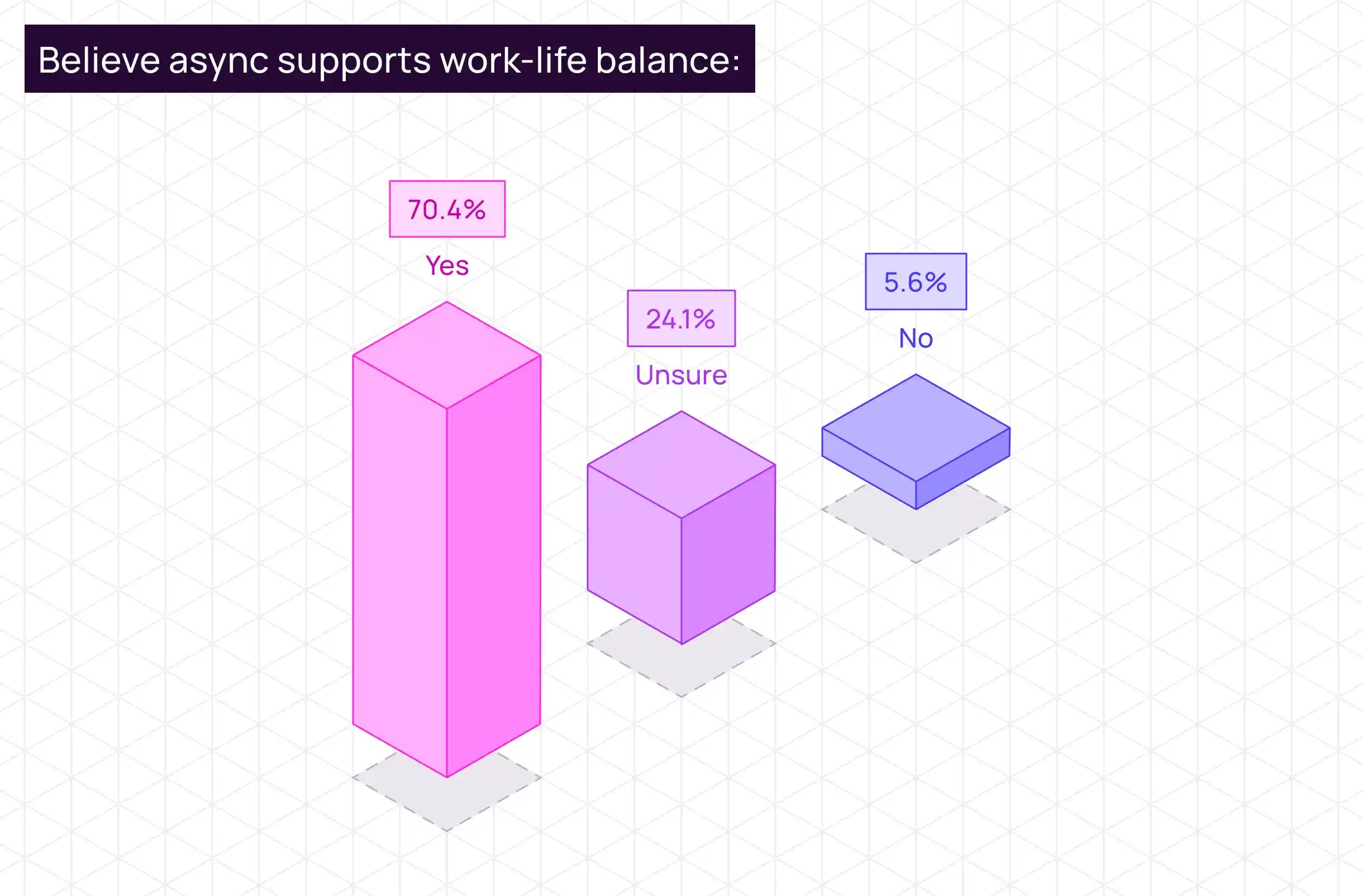
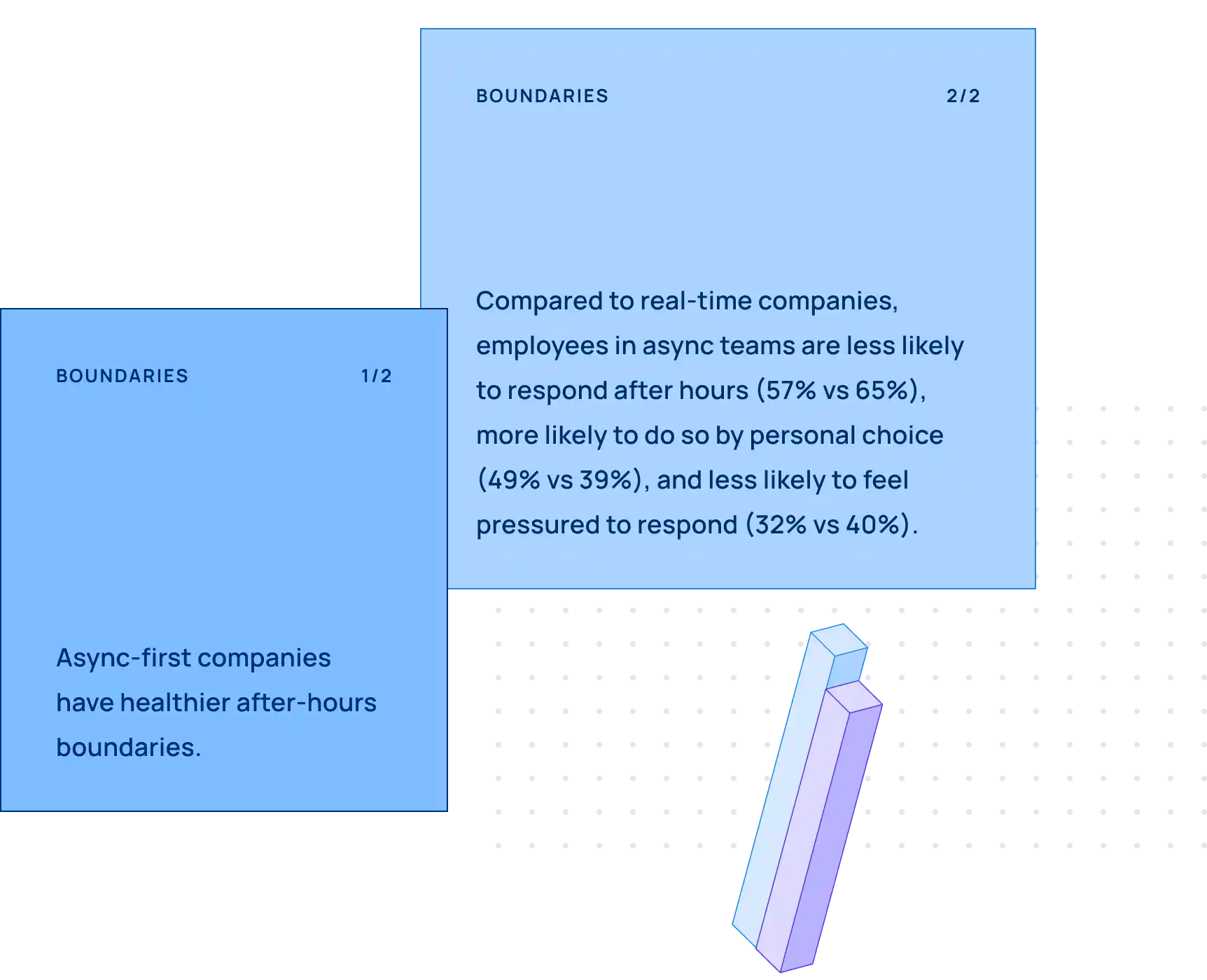
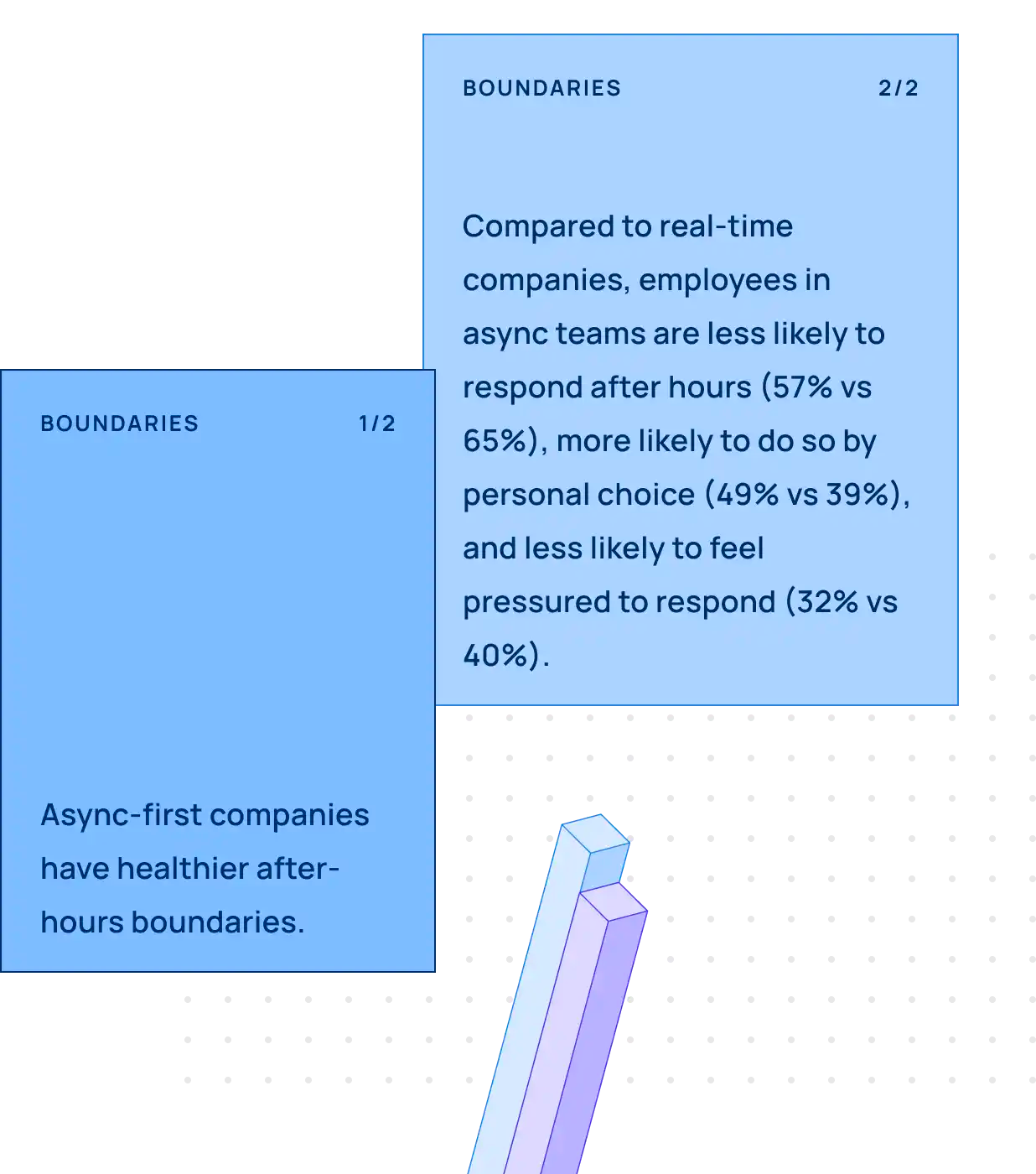
Among people who already work asynchronously, 84% say their coworkers always or mostly respect their non-work time, and 63% feel they have real control over their schedule.
8 in 10 workers say the meetings they attend could have been async
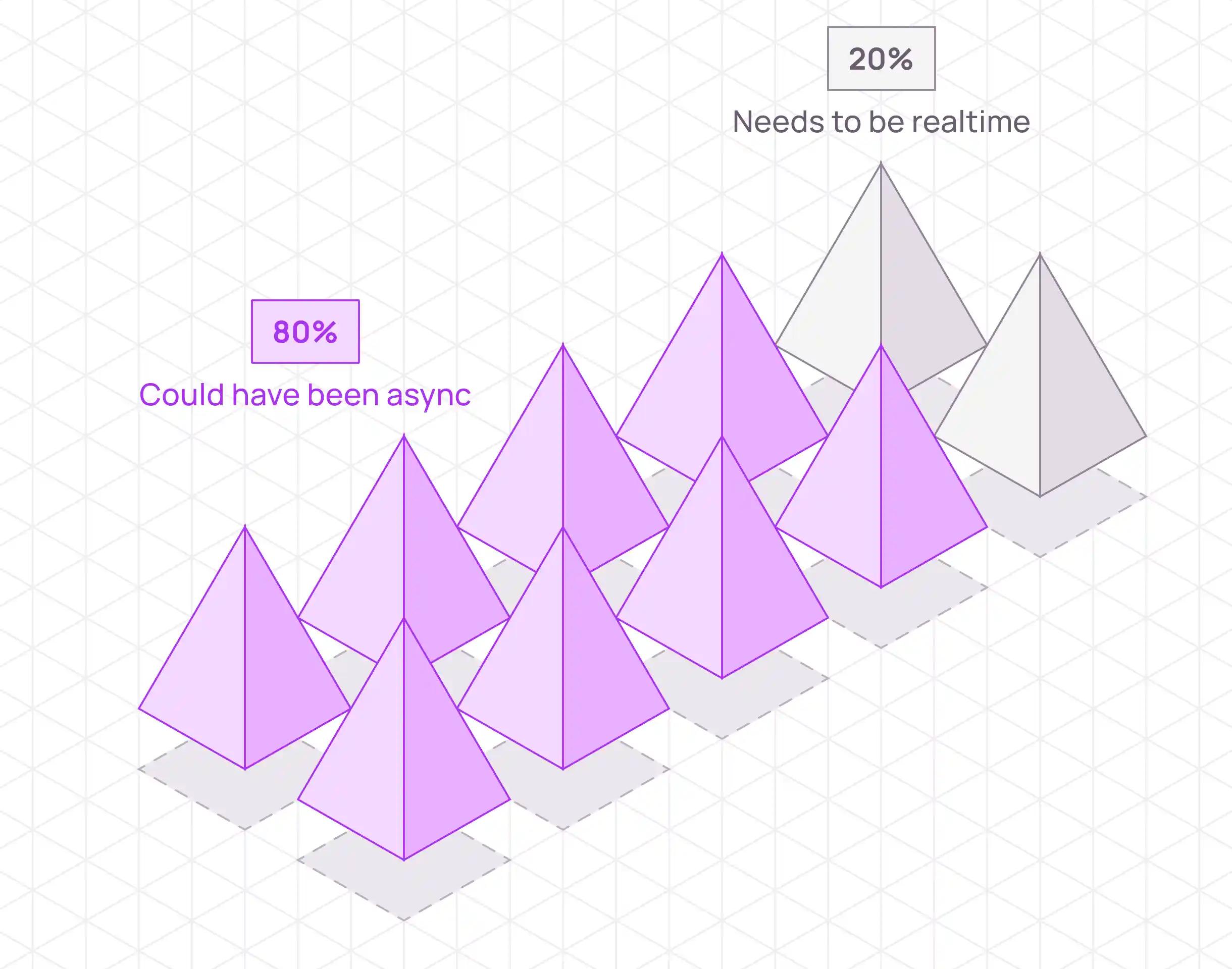
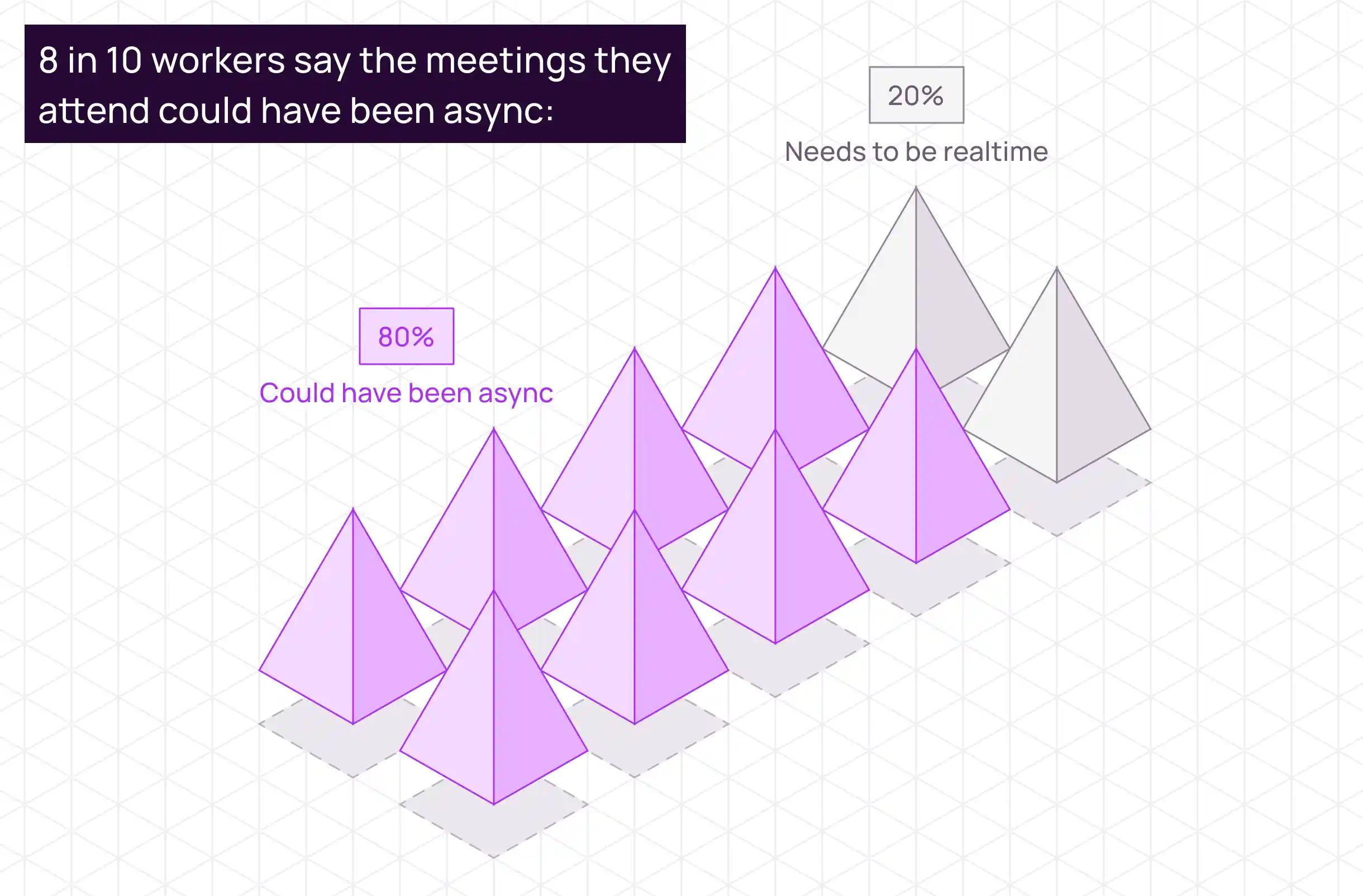
8 in 10 people report being in meetings that could have been handled asynchronously. Only 1.9% feel their company completely avoids unnecessary meetings.
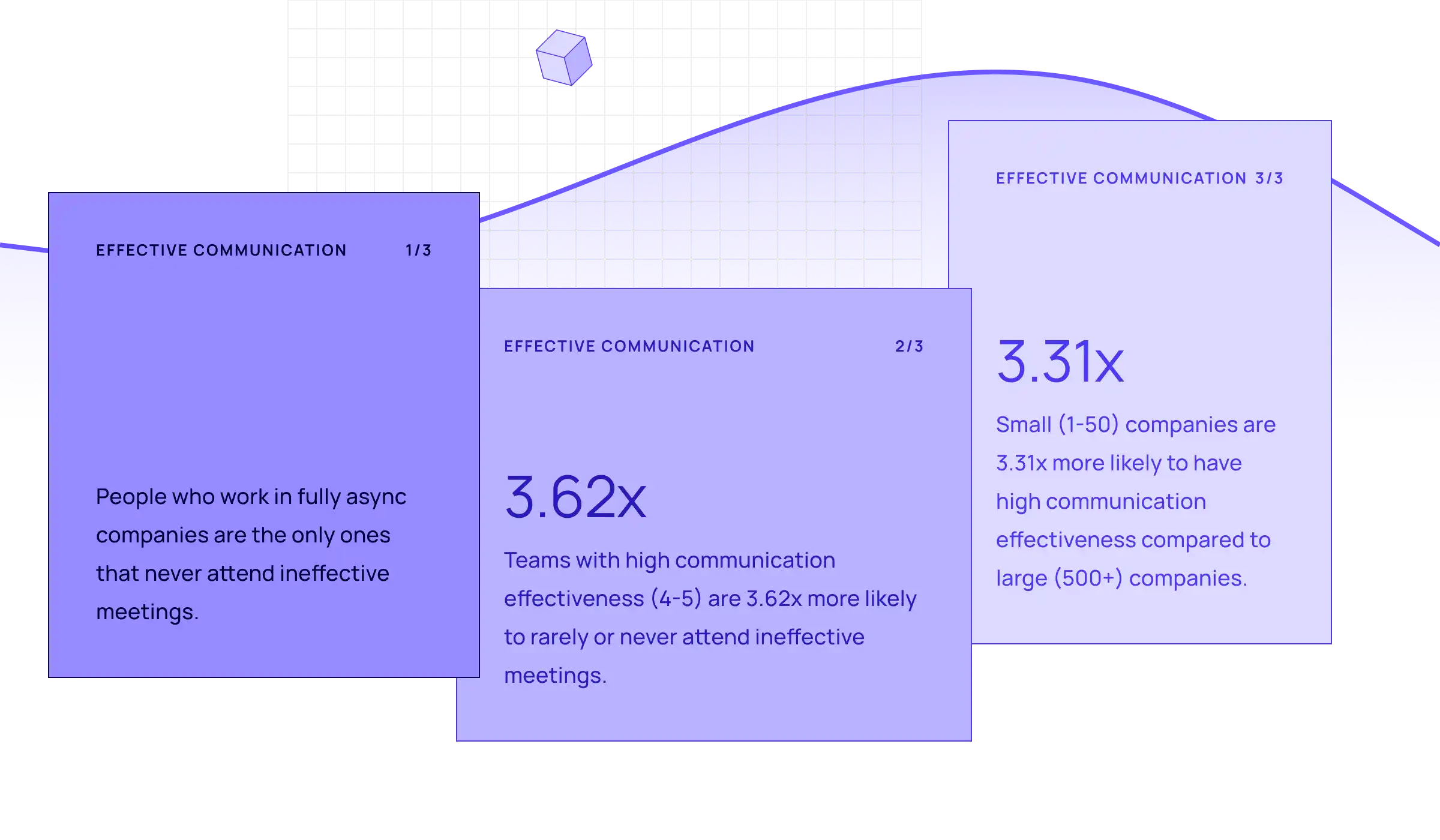
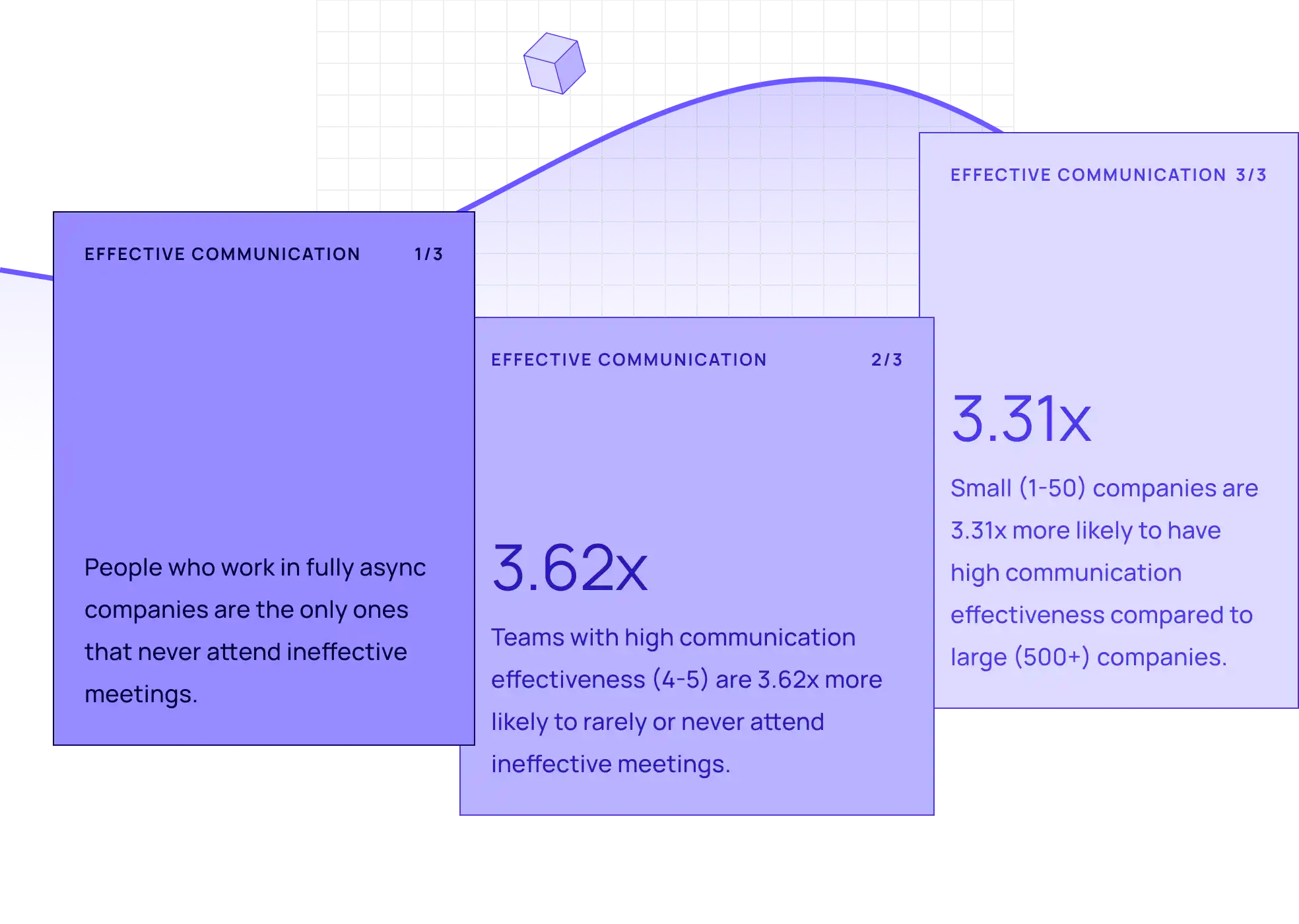
Here's the striking part: 100% of workers who never attend unnecessary meetings are fully remote. This suggests that visibility pressure plays a role. In office or hybrid environments, meetings often serve as signals of participation or alignment, even when they aren’t strictly necessary.
High-performing teams aren't anti-meeting, they're more intentional
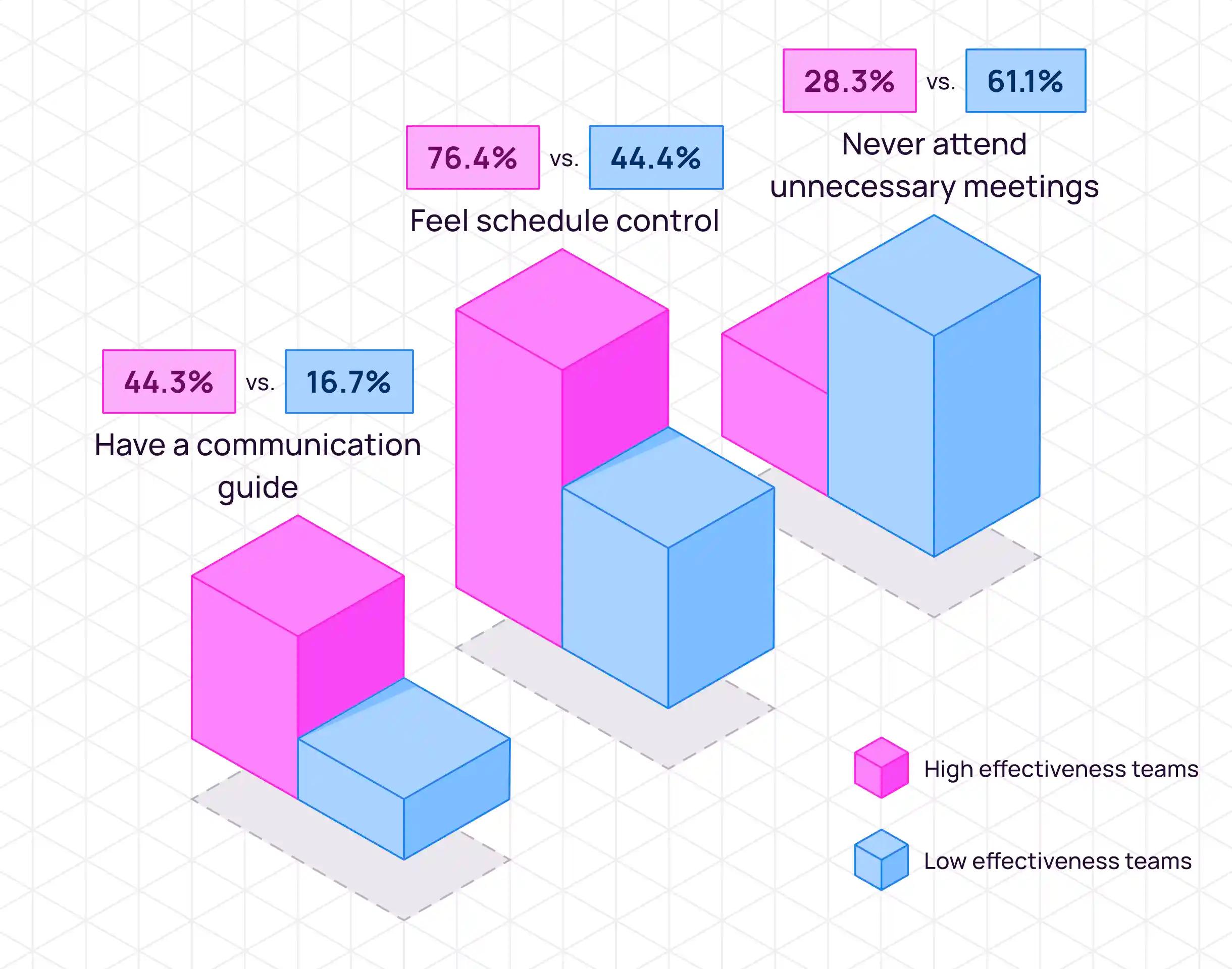
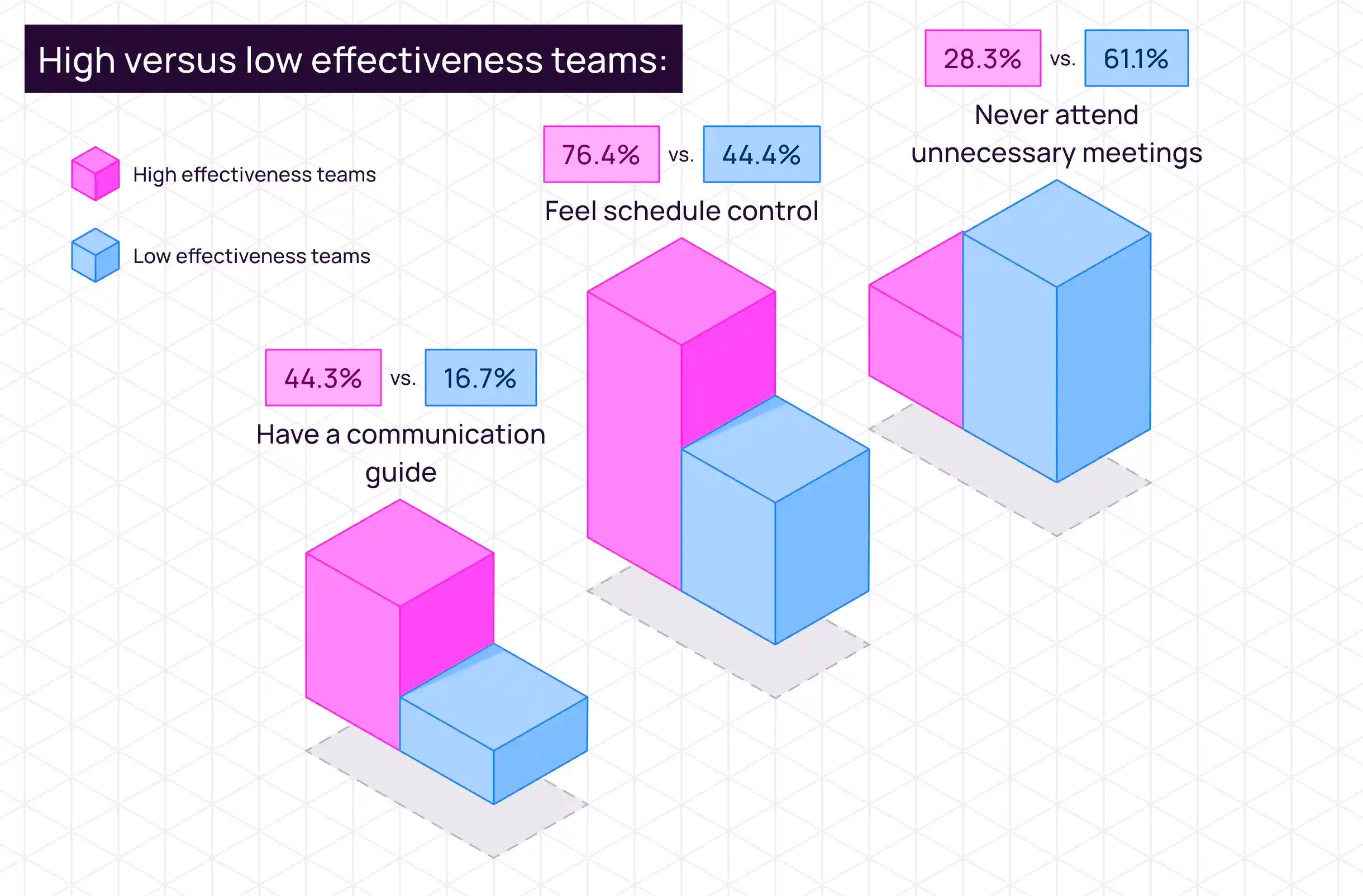
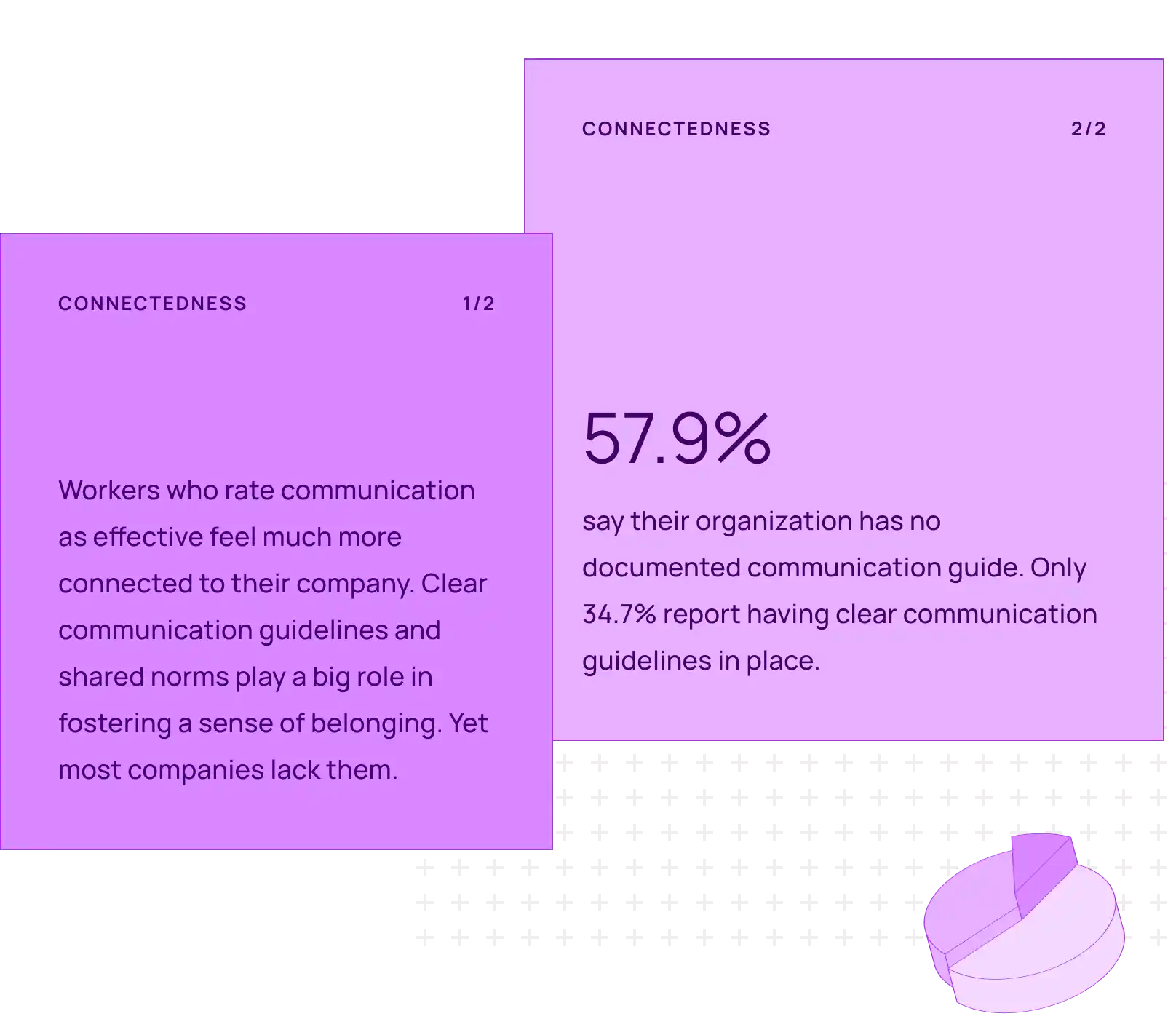
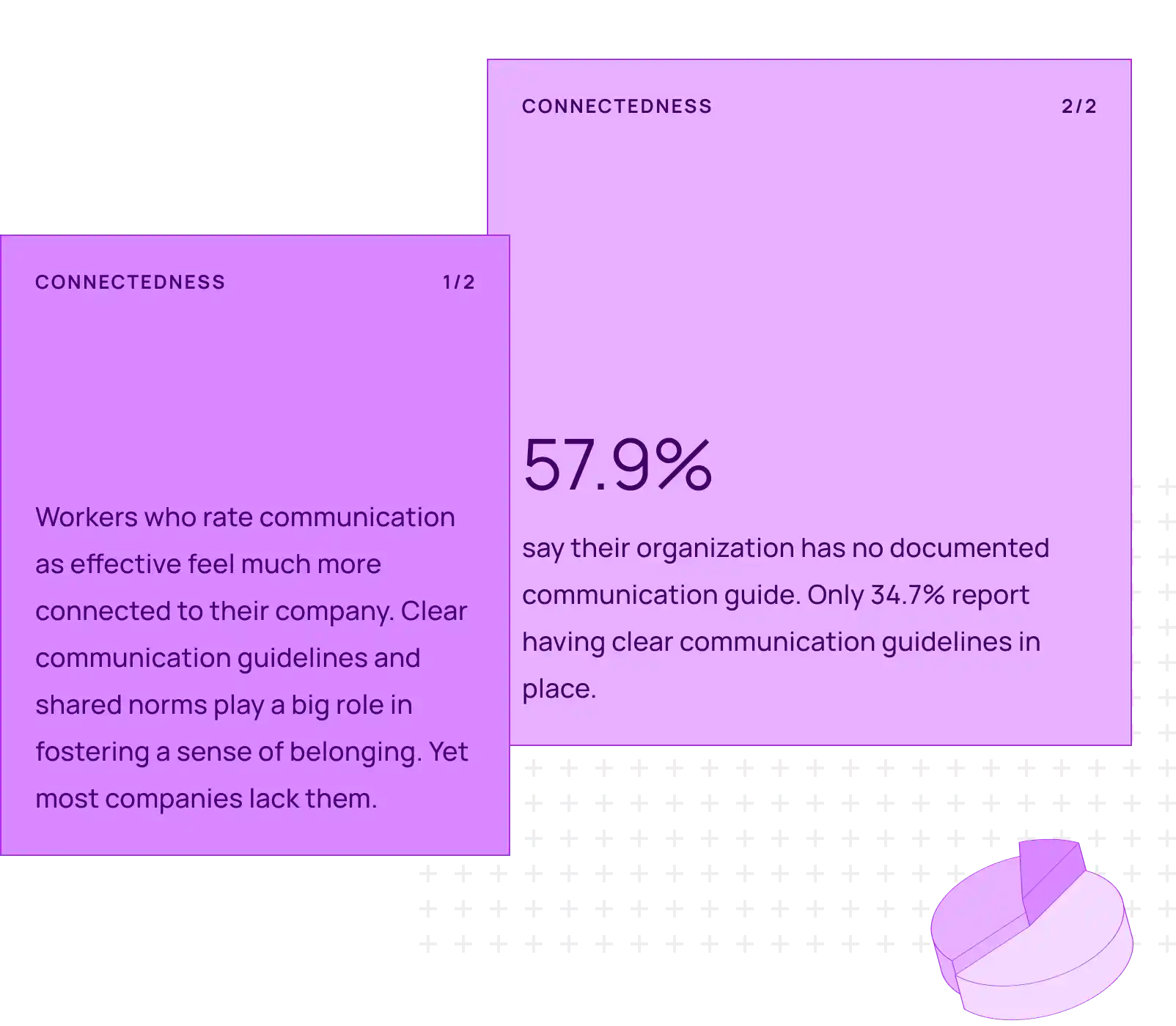
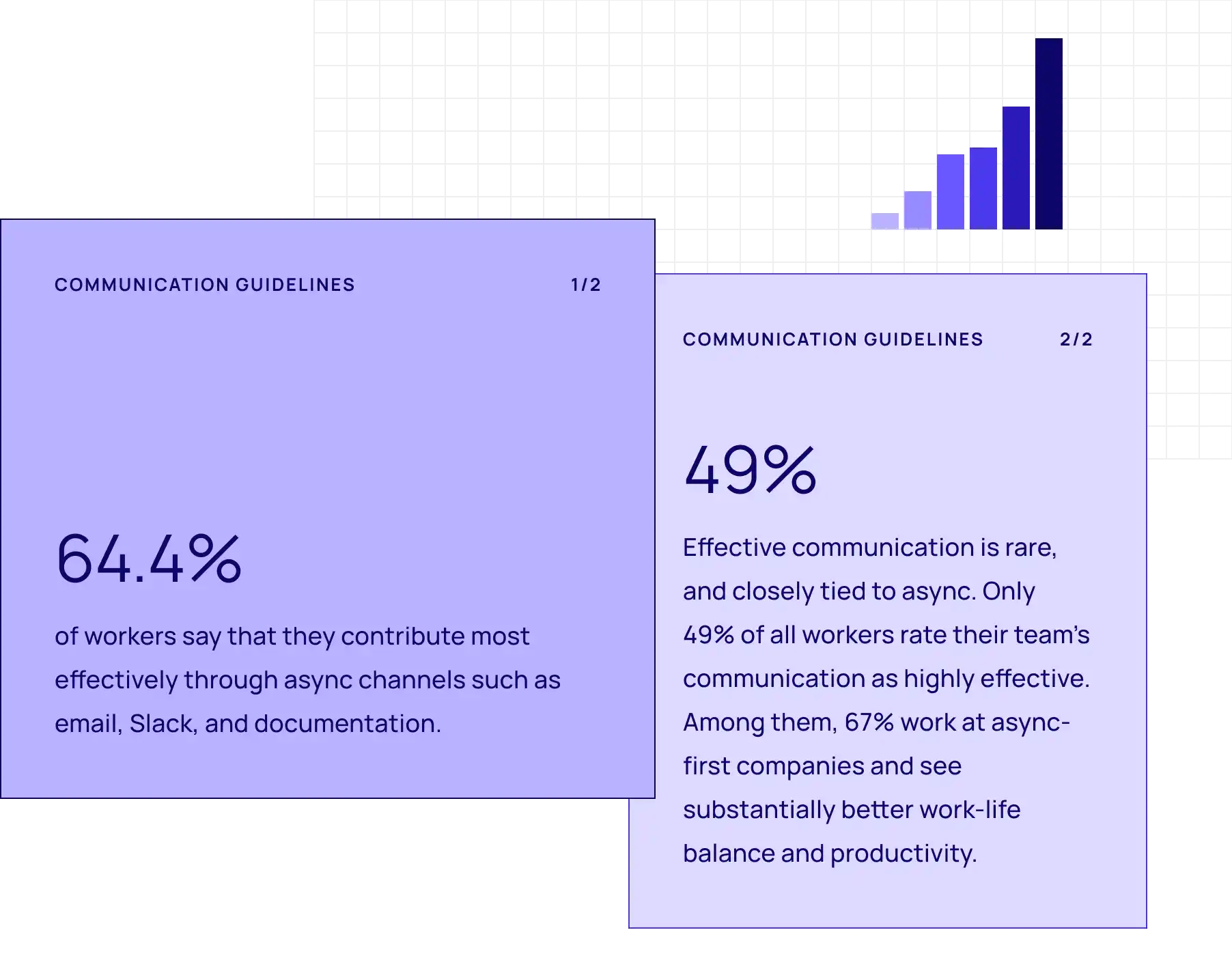
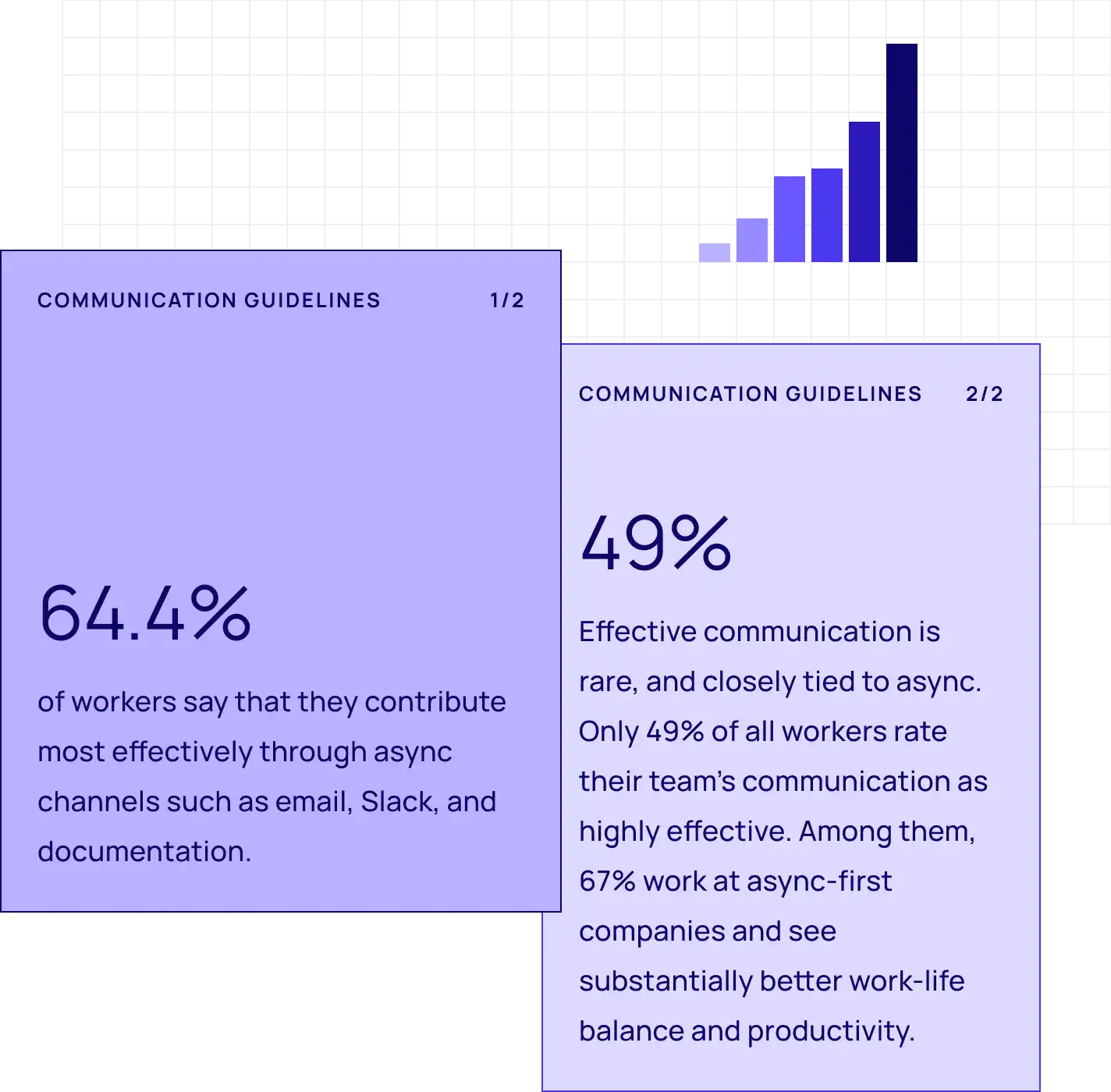
High-performing teams are 2.7x more likely to have documented communication guidelines and 3.6x more likely to rarely or never attend unnecessary meetings.
Fully async teams feel most connected
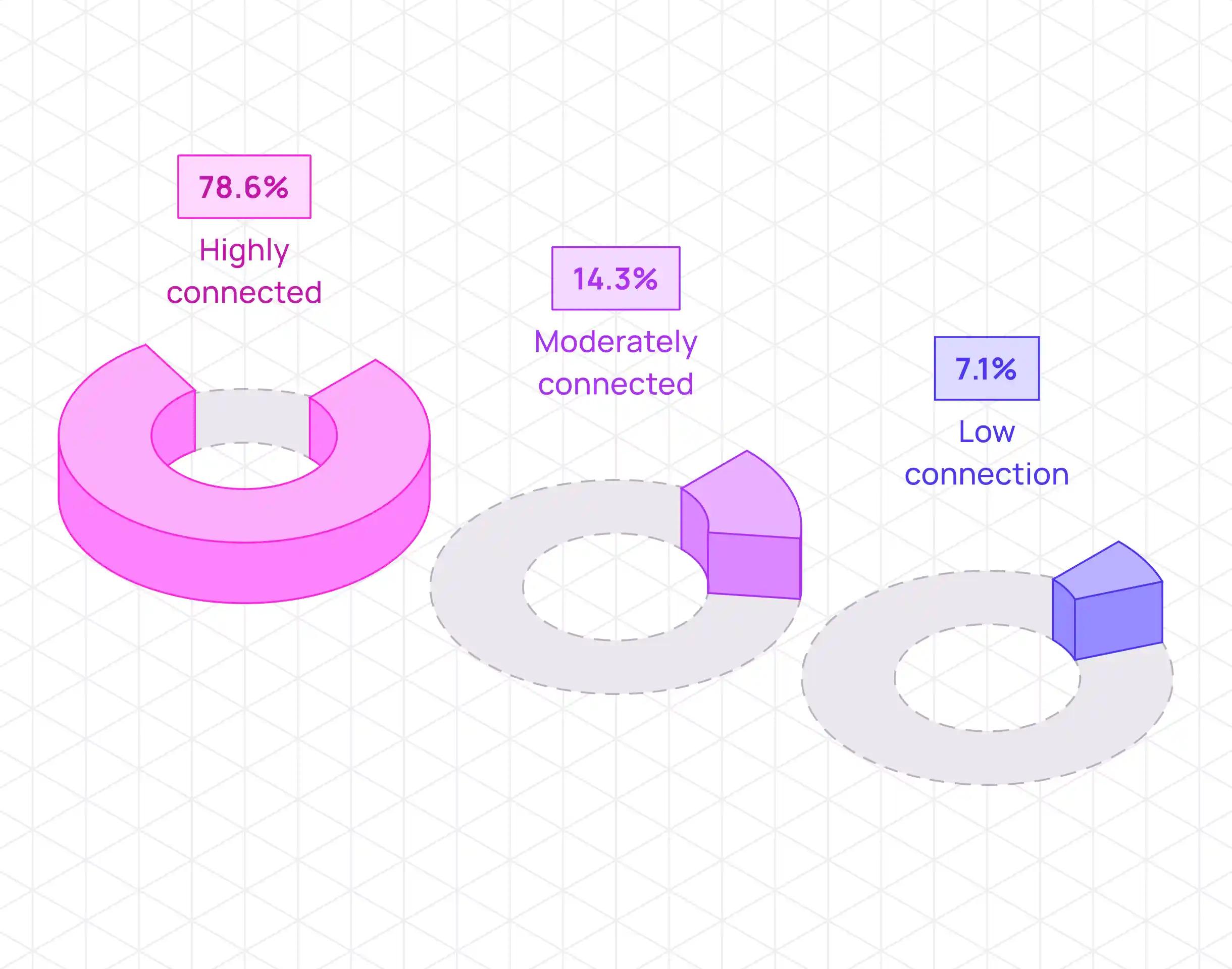
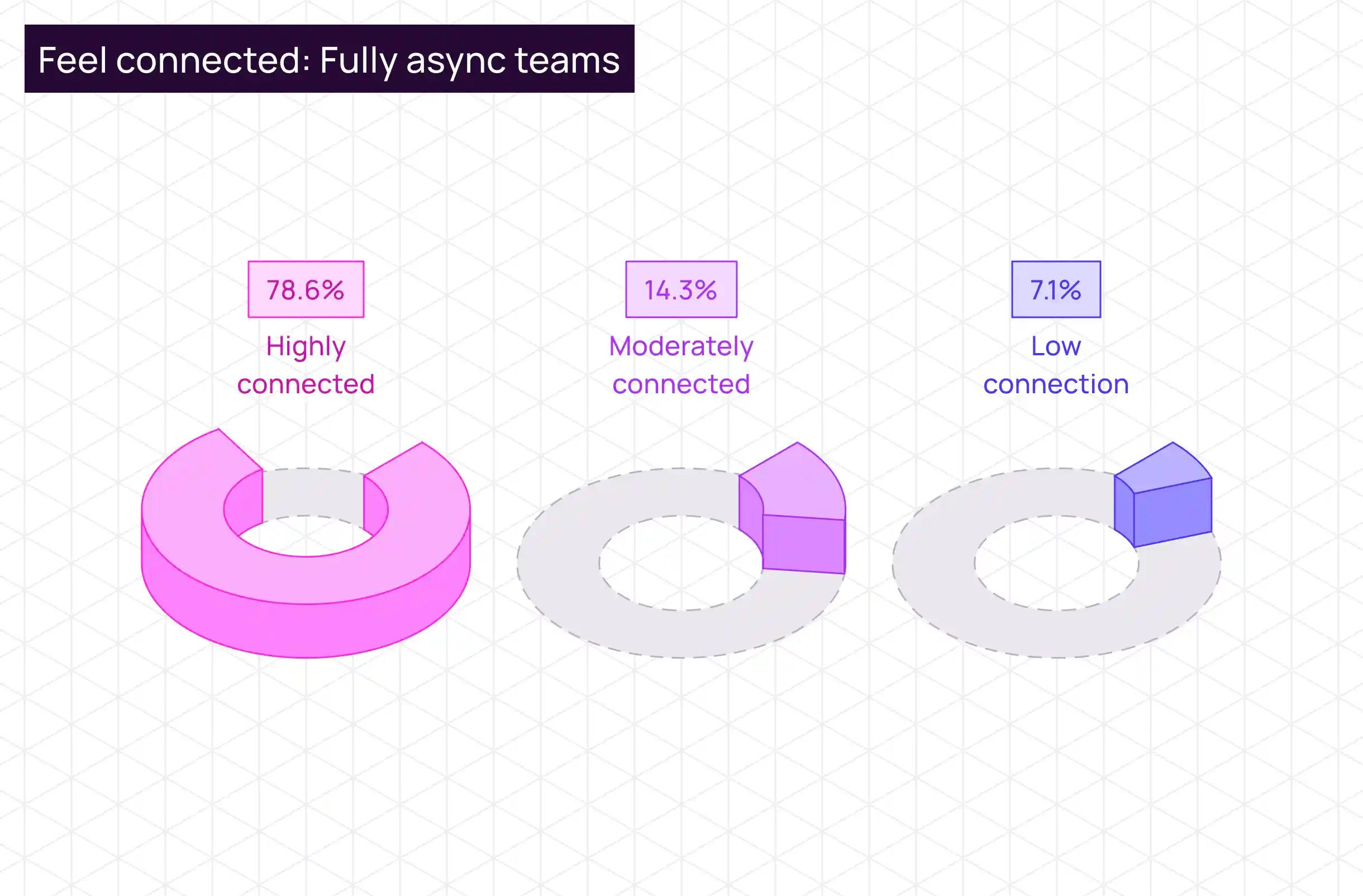
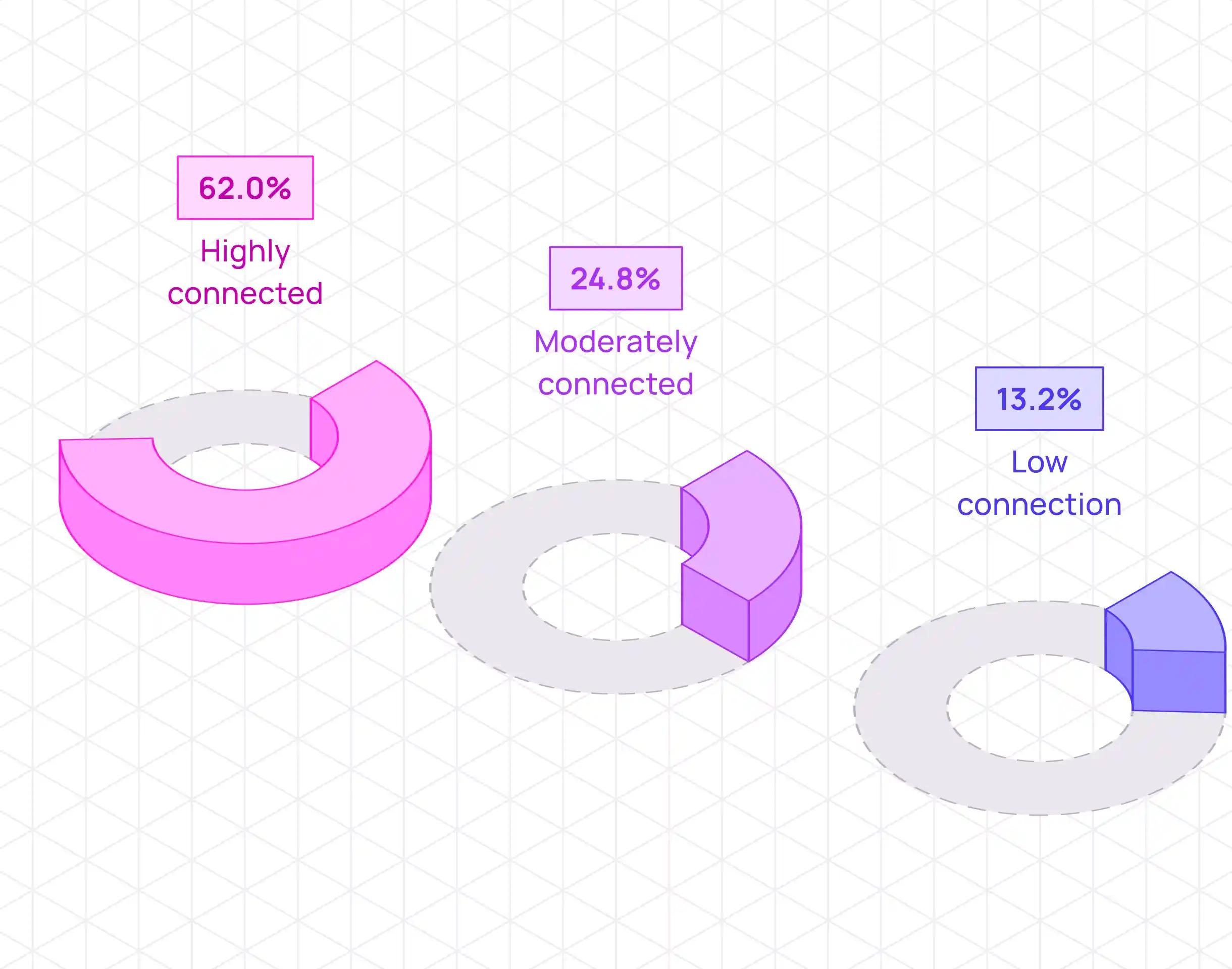
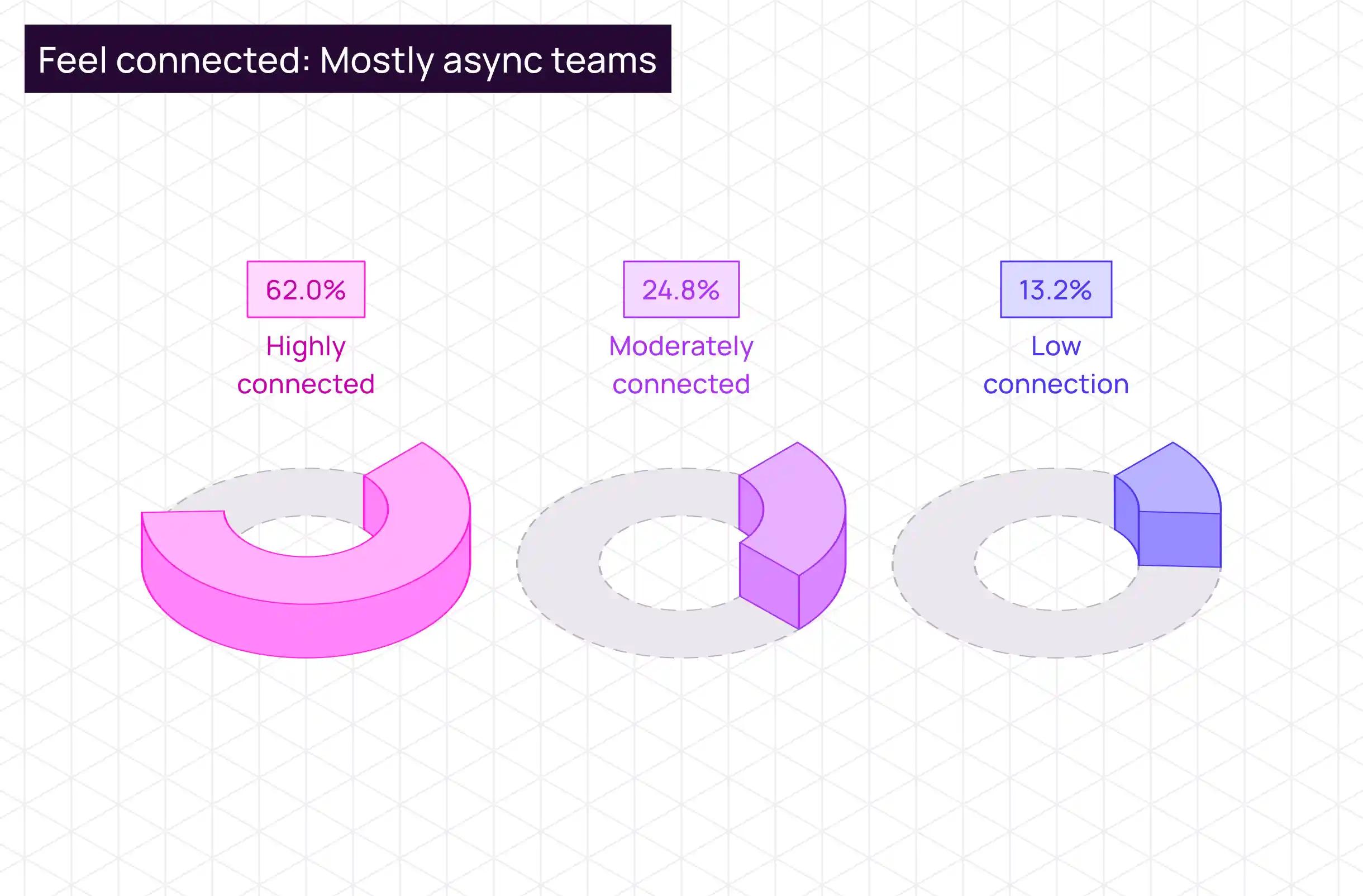
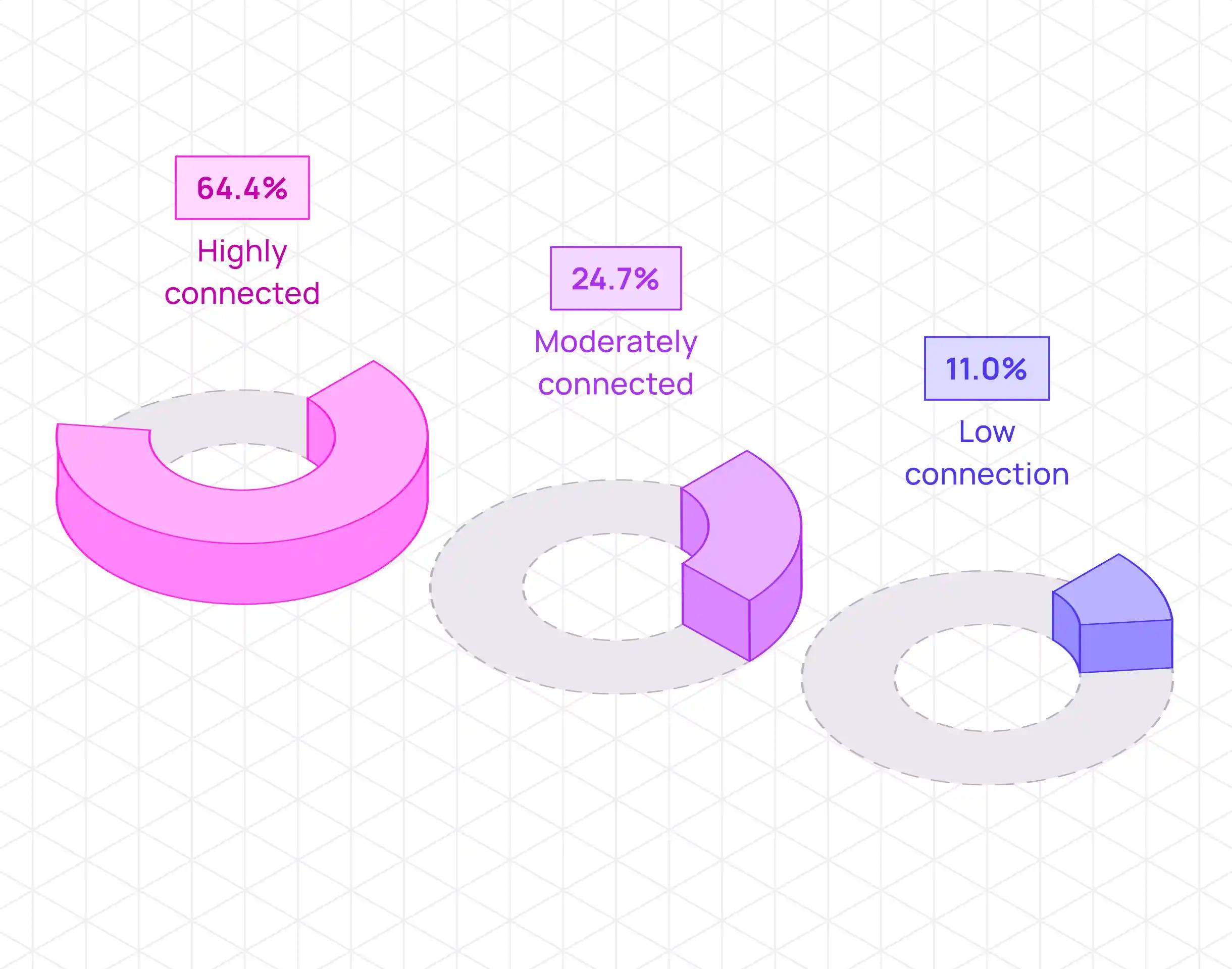
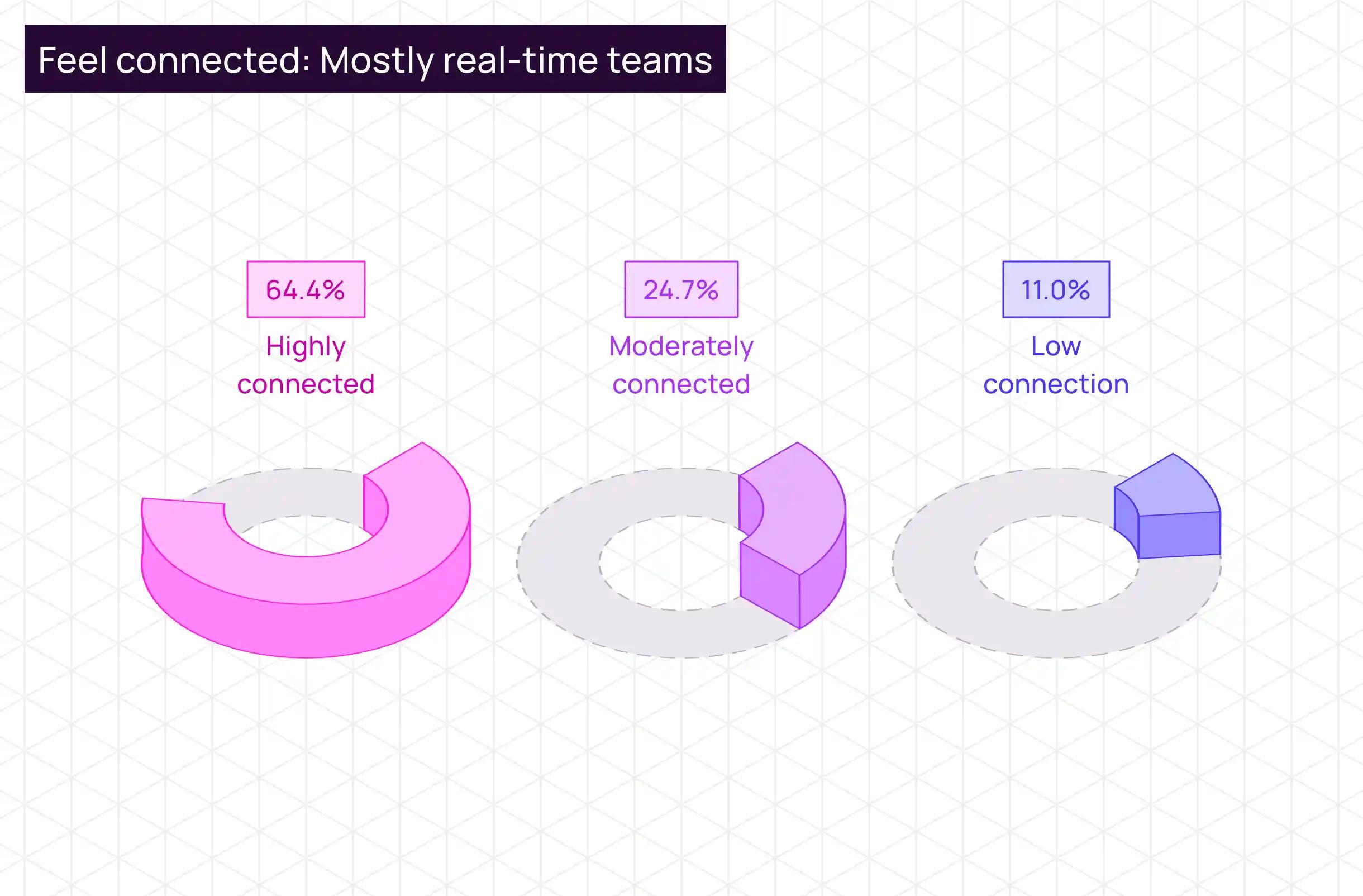
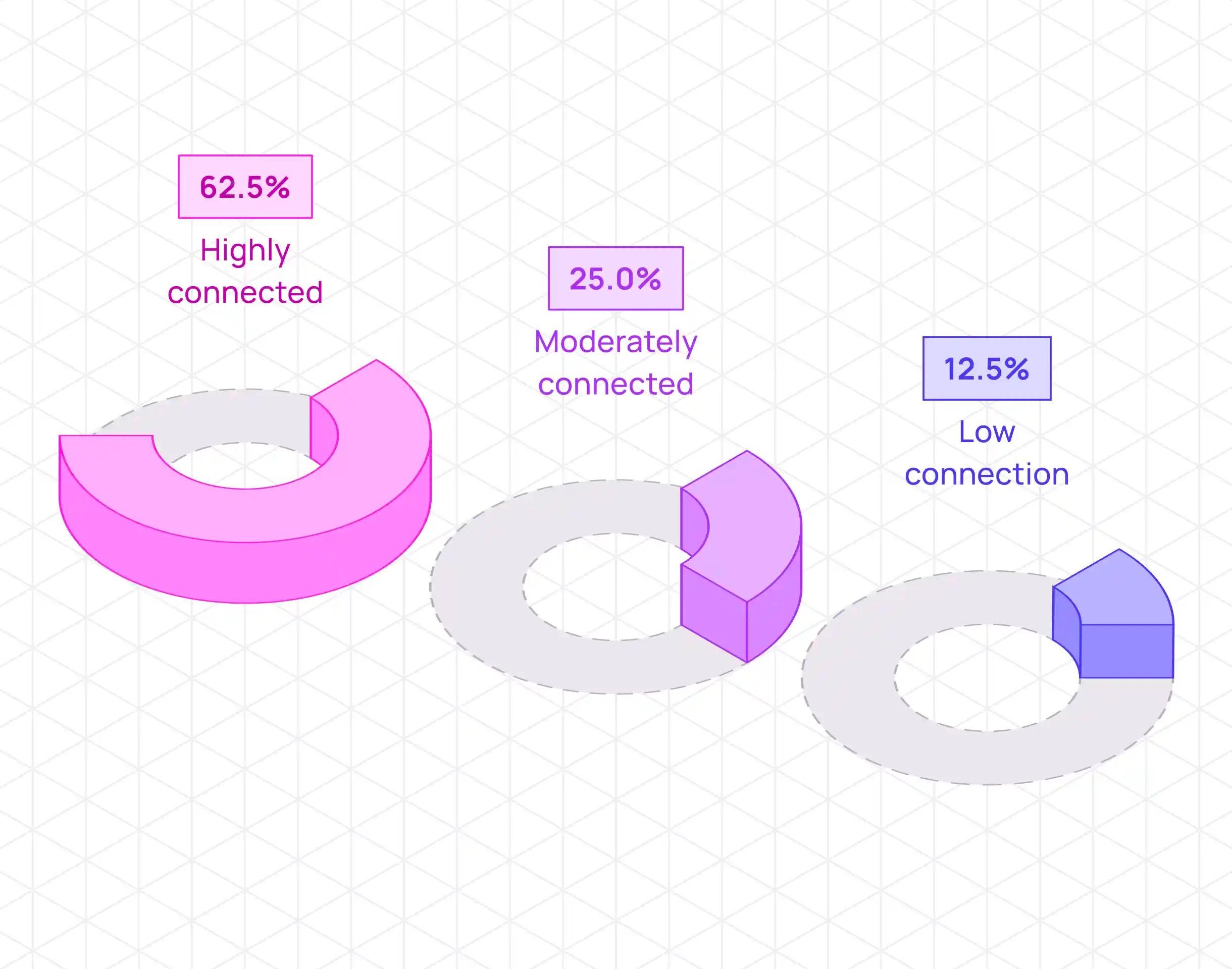
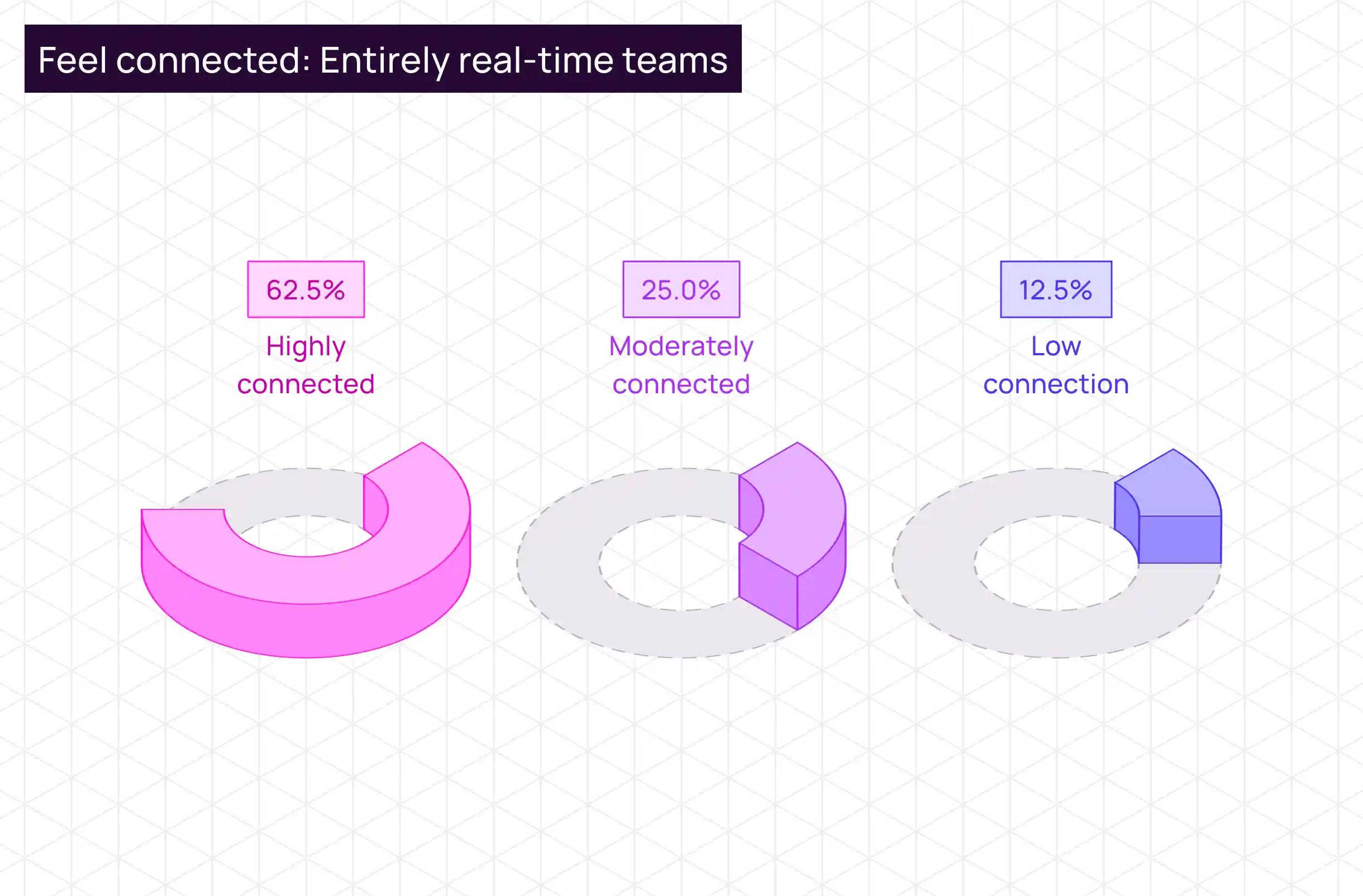
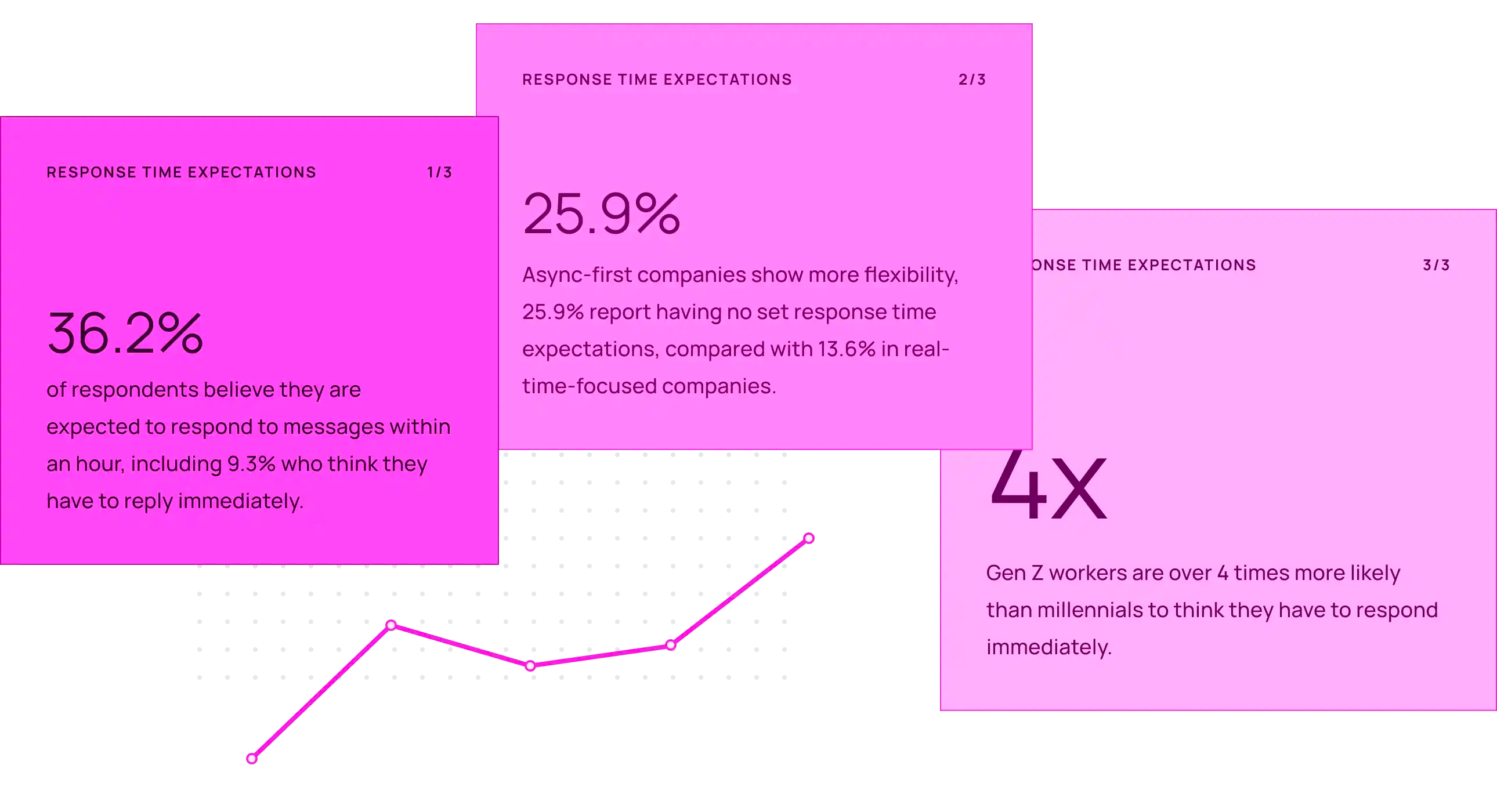
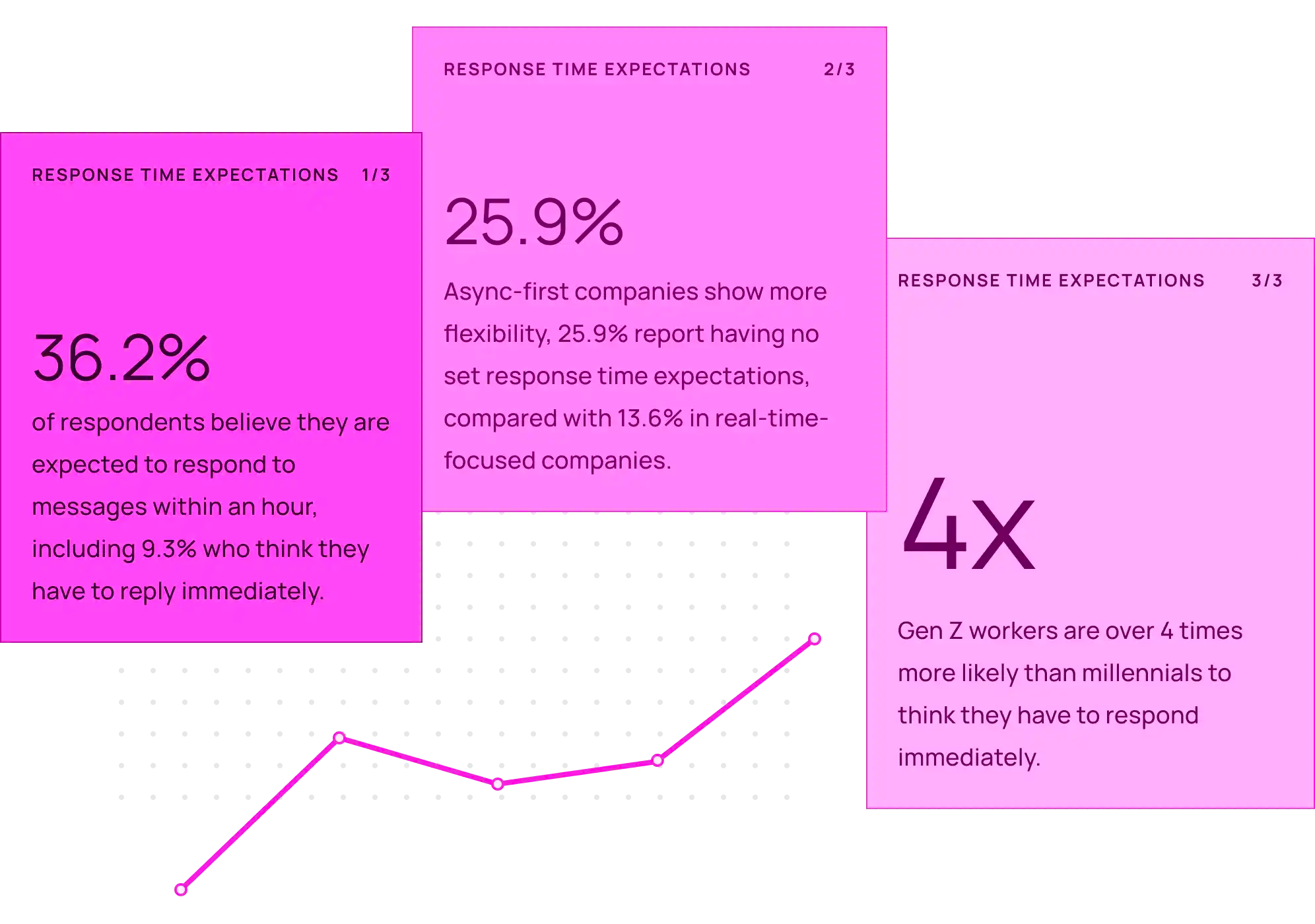
Surprisingly, fully async companies report the highest levels of team connection. 78.6% report feeling highly connected to their team, even without frequent in-person interaction or constant real-time communication. The lowest levels of connection show up in teams that have only partially adopted async. This likely reflects inconsistency. When teams mix async and real-time work without clear norms, communication becomes fragmented, and expectations are unclear.
People managers are the biggest async advocates
While leadership and ICs are split roughly 50/50, 70% of people managers want more async.
That context matters. People managers also report attending the most unnecessary meetings and spending more time in real-time collaboration. Many of these are recurring 1:1s, status check-ins, or meetings where their team members, who are closer to the actual work, could often contribute more directly. Being constantly pulled in for coordination leaves less time for focused work and for setting their teams up for success, which explains why managers feel the “always-on” pain most acutely.
People managers also report working 3 more hours per week.
Workers average only 11.7 hours of deep focus per week
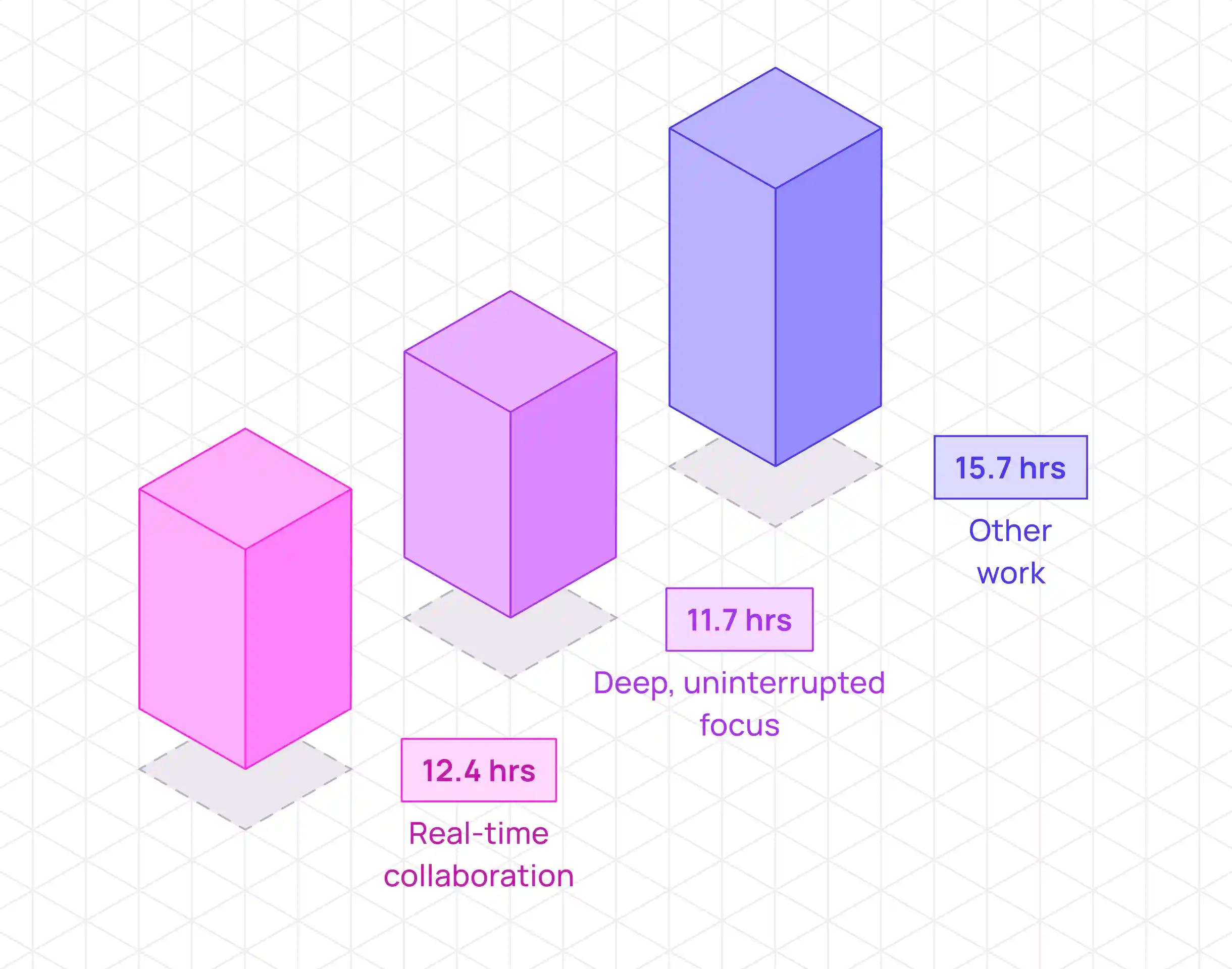
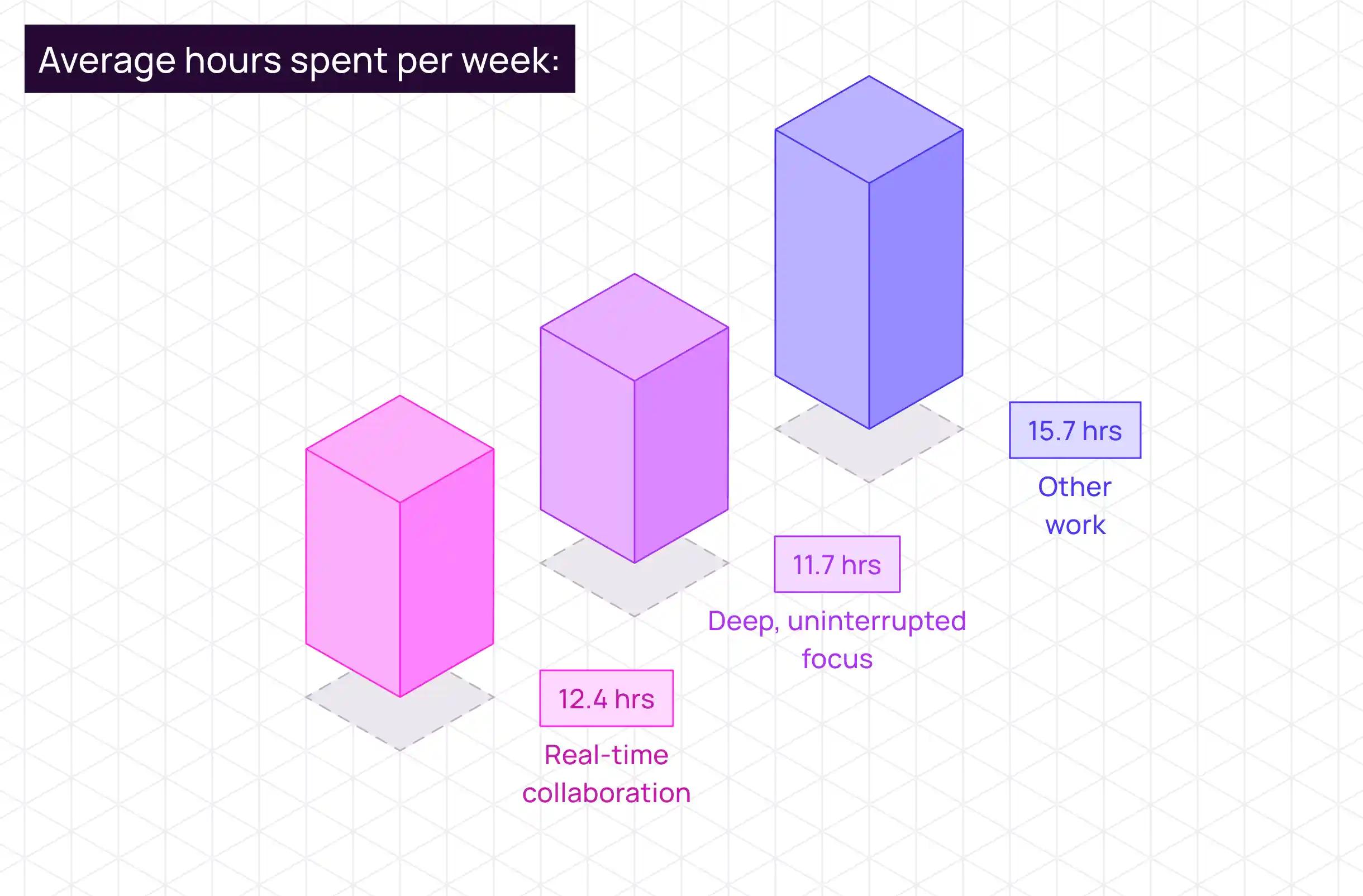
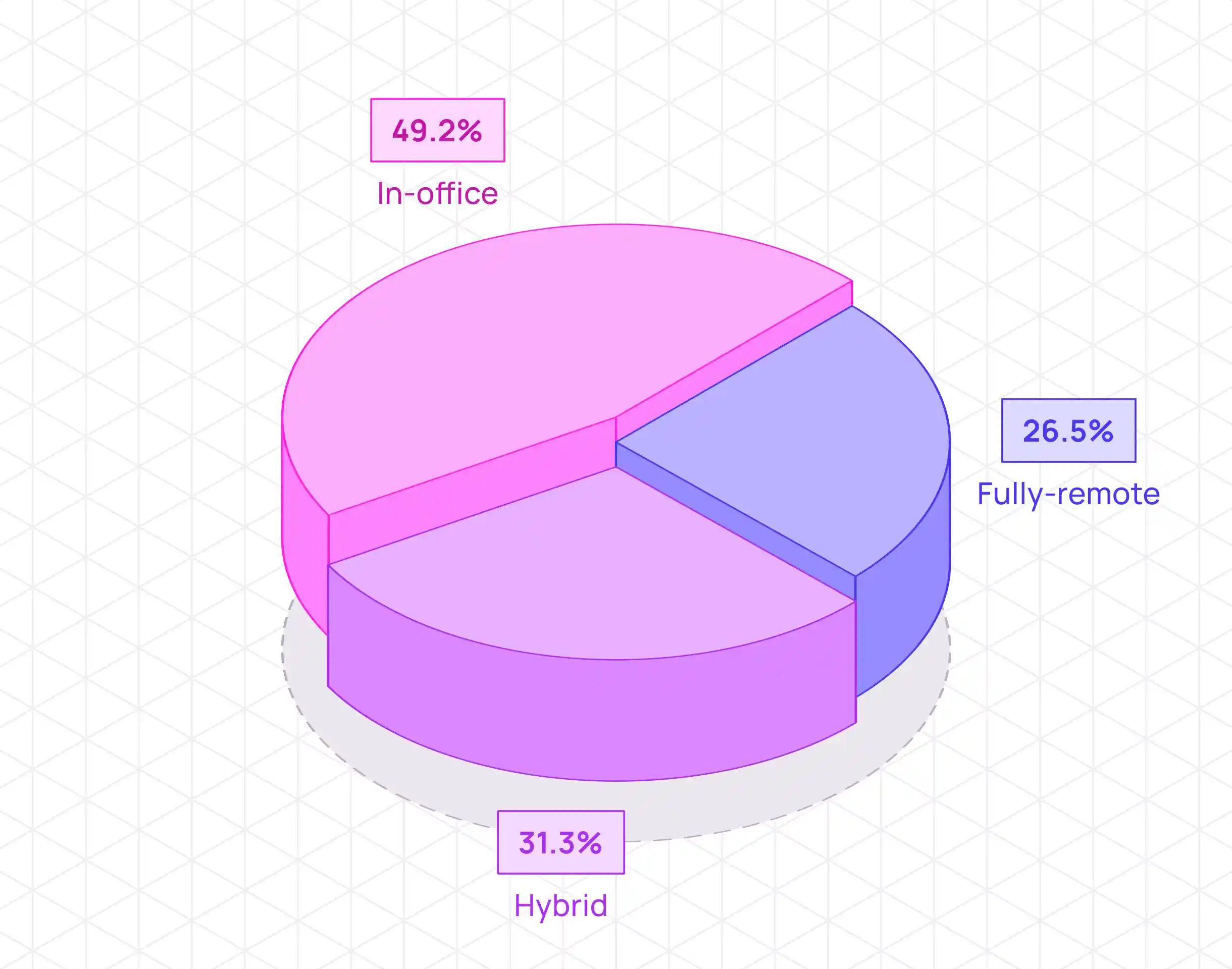
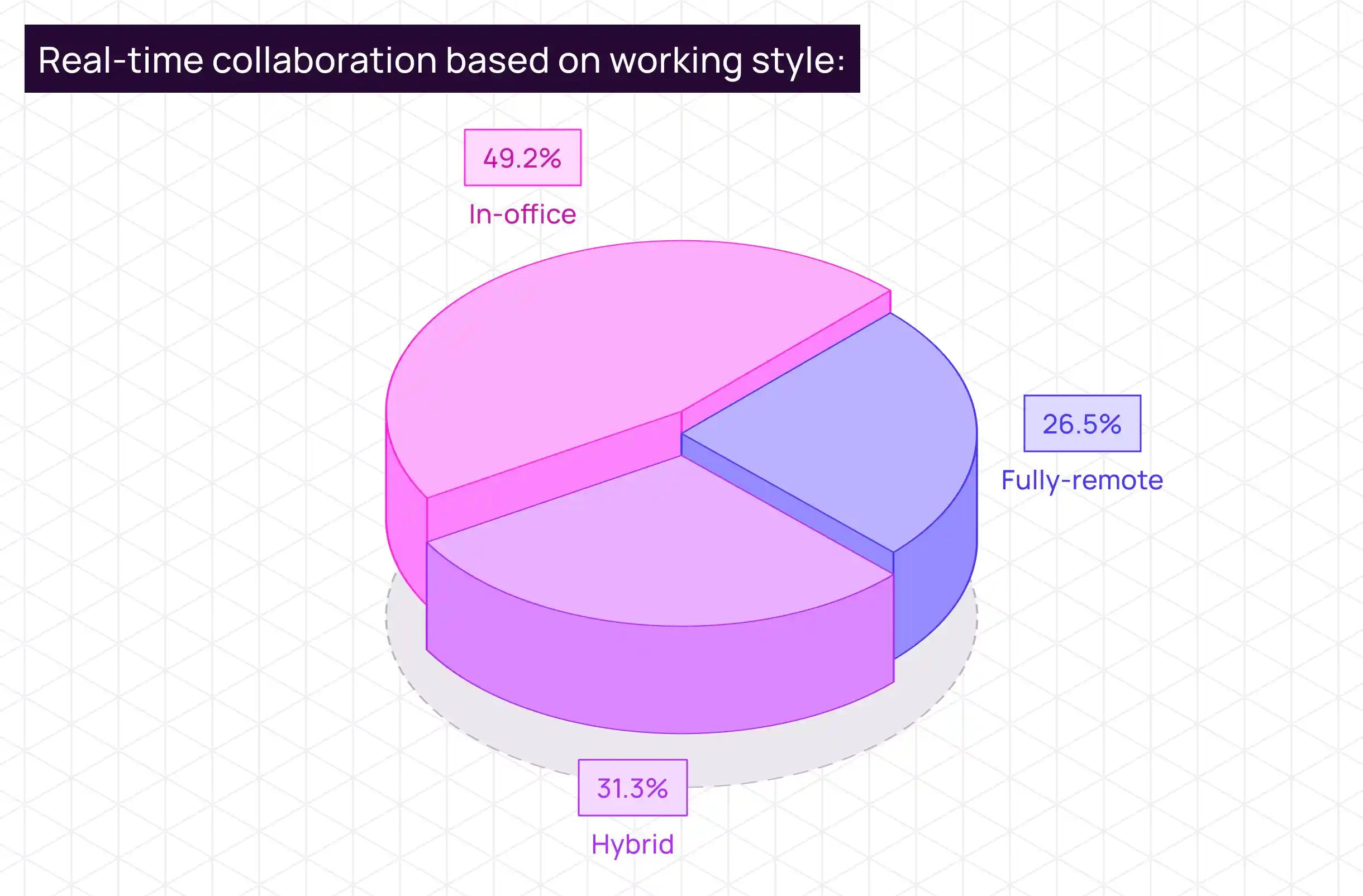
- Survey respondents report working an average of 39.8 hours per week, which closely aligns with the typical 40-hour workweek.
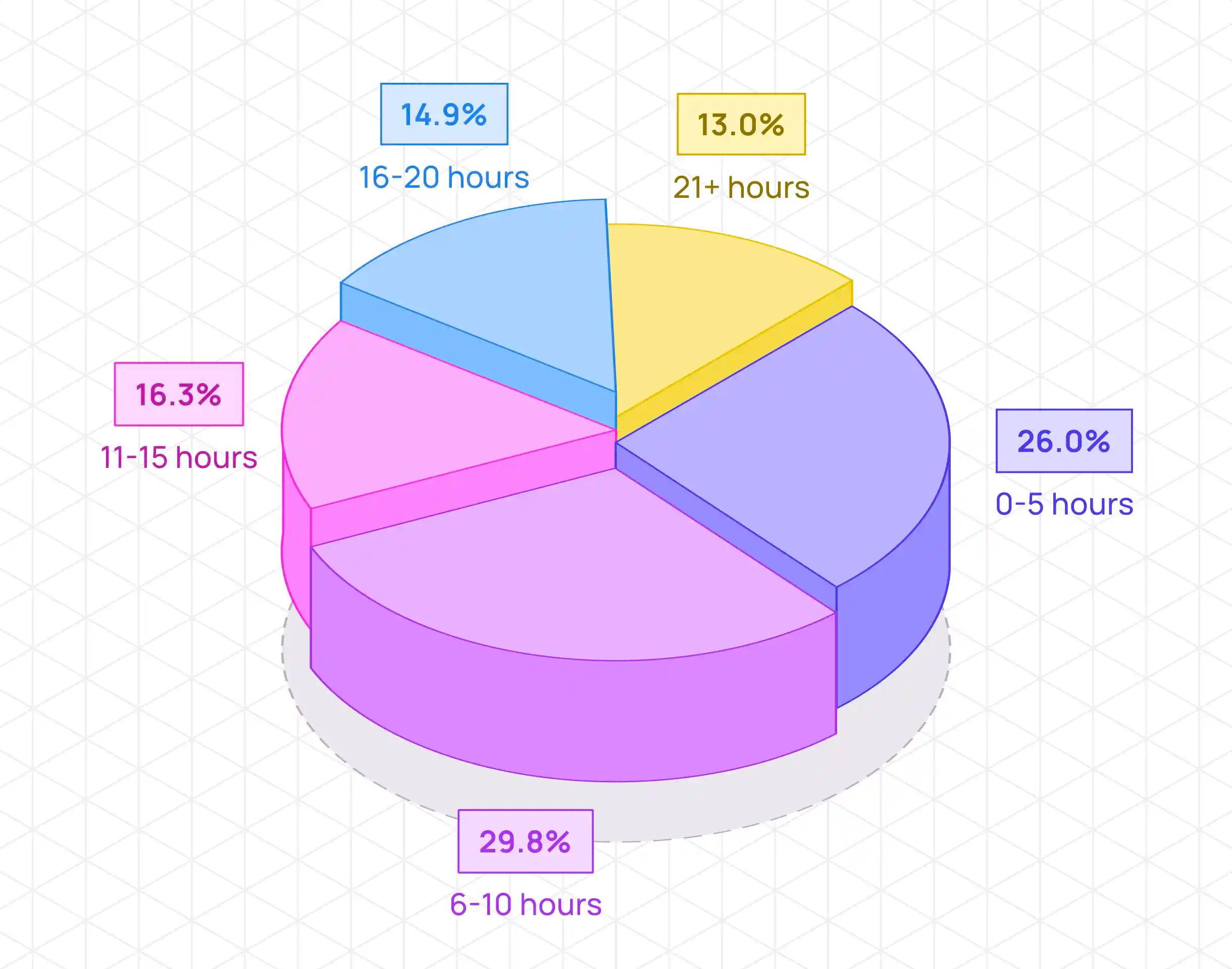
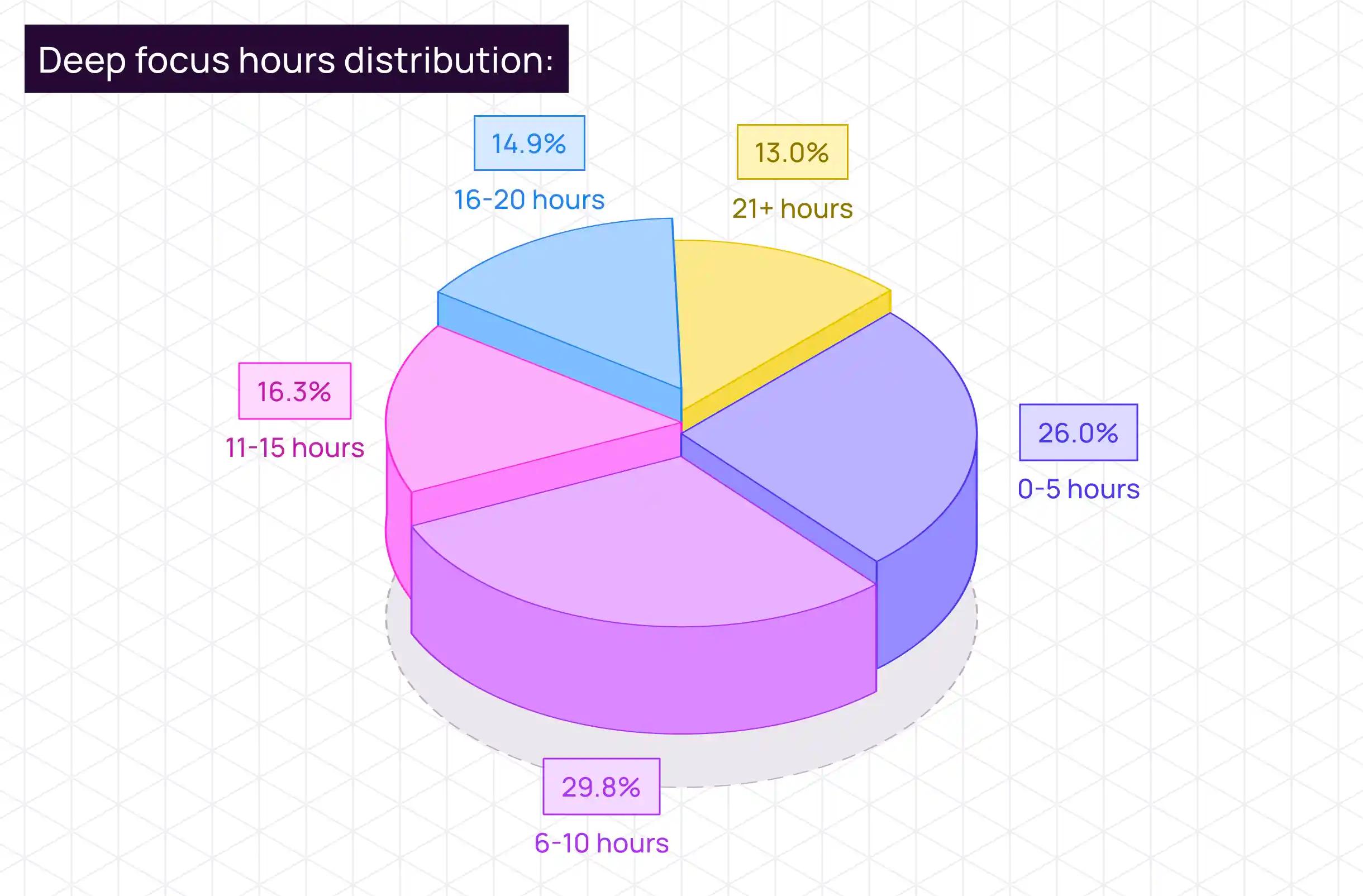
- 26% of workers get <5 hours of deep focus per week.
- In-office workers spend nearly half their time (49.2%) in real-time collaboration, roughly 7 more hours per week than fully remote workers.
Alignment is async's biggest challenge
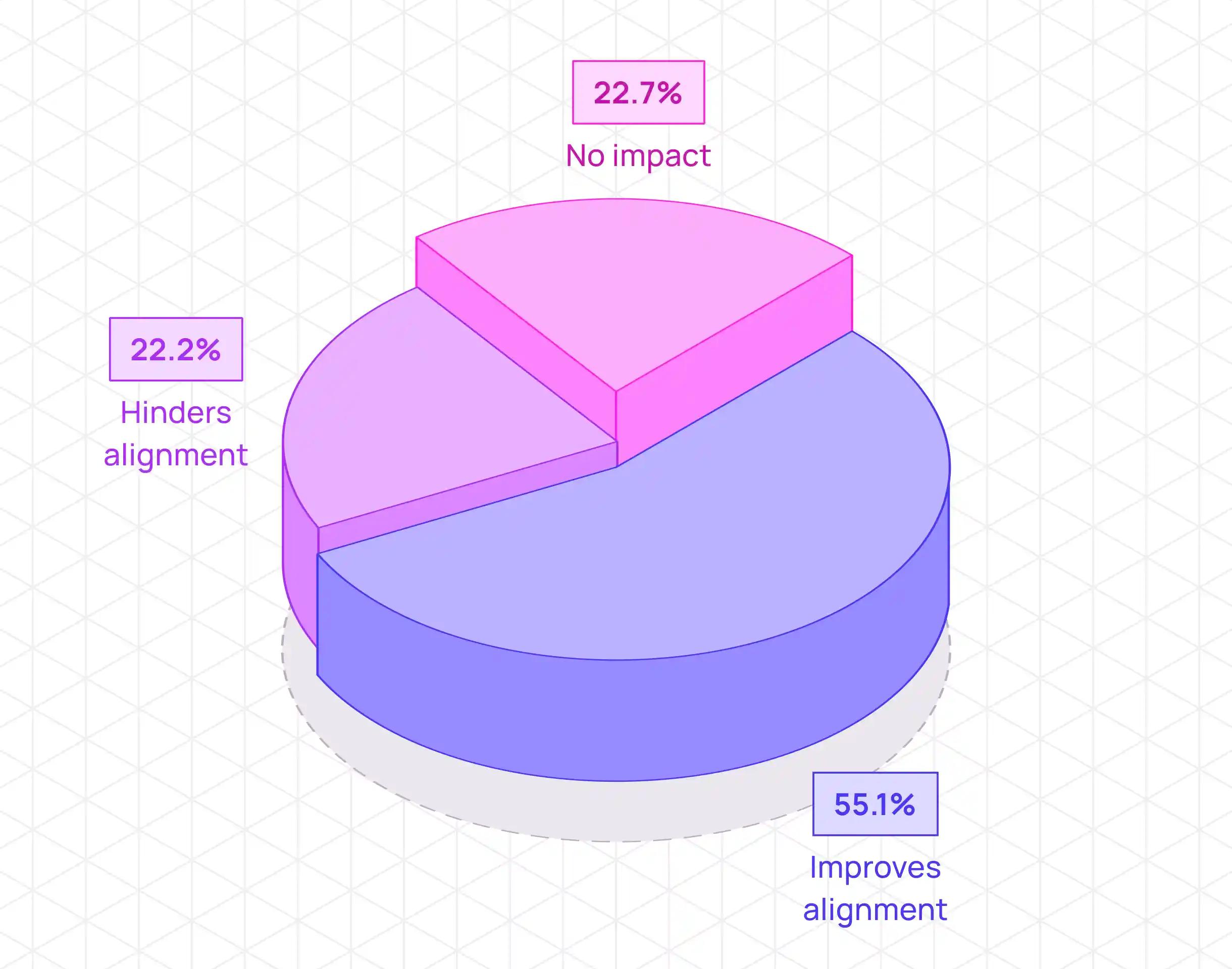
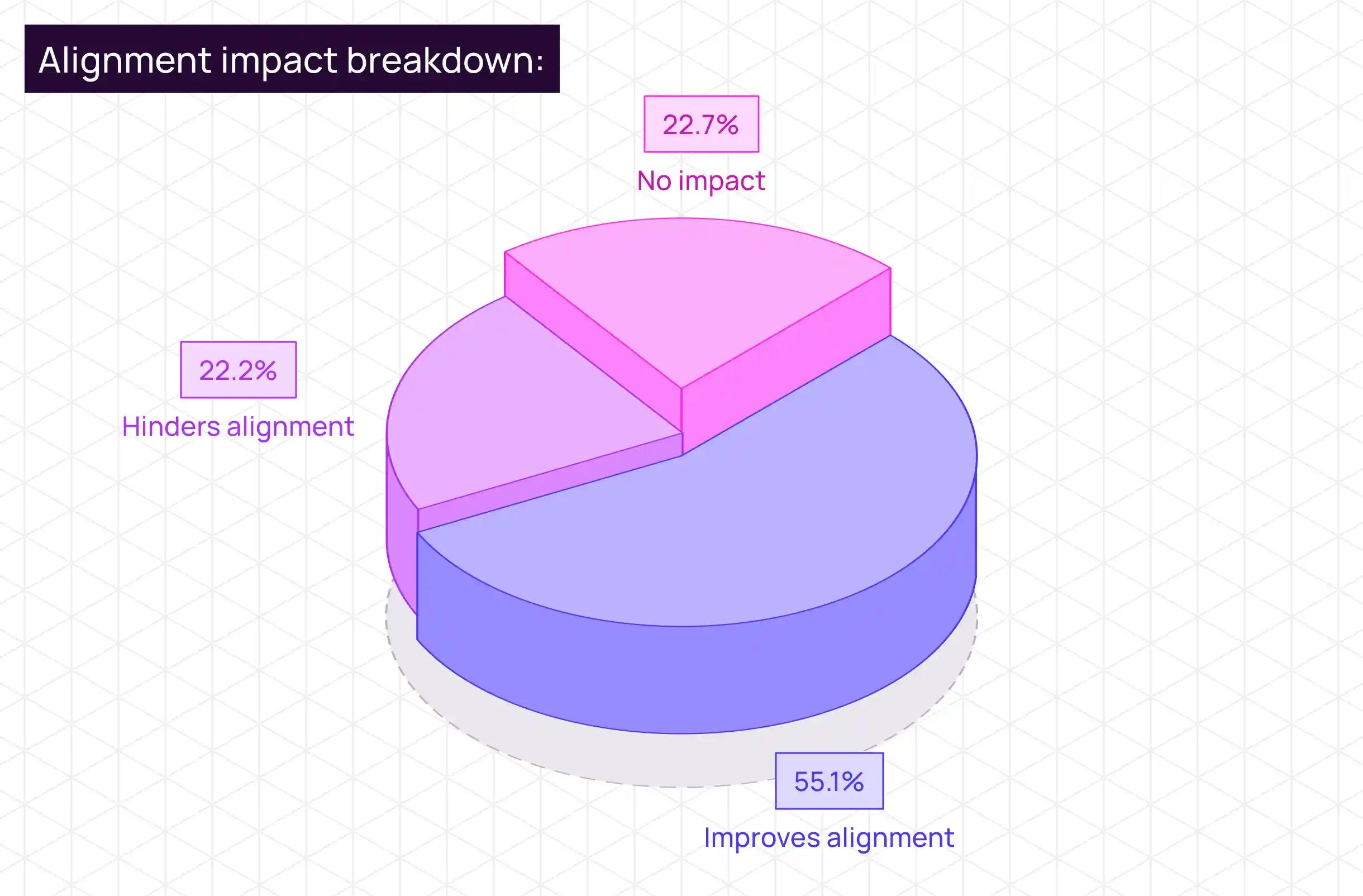
Alignment - described as confidence that teams share direction and goals - is async's biggest vulnerability. 55% say async improves it, while nearly a quarter (22%) say it hinders alignment. Compare that to productivity, where 83% say async helps, or work-life balance, where 70% report improvement. Even among supporters, enthusiasm is lukewarm, just 17% say async significantly improves alignment.
While many people point to alignment challenges and the fact that async simply isn’t part of their culture, technology limitations and productivity concerns are cited as the least impactful barriers to async adoption.
70% believe async will become more prevalent
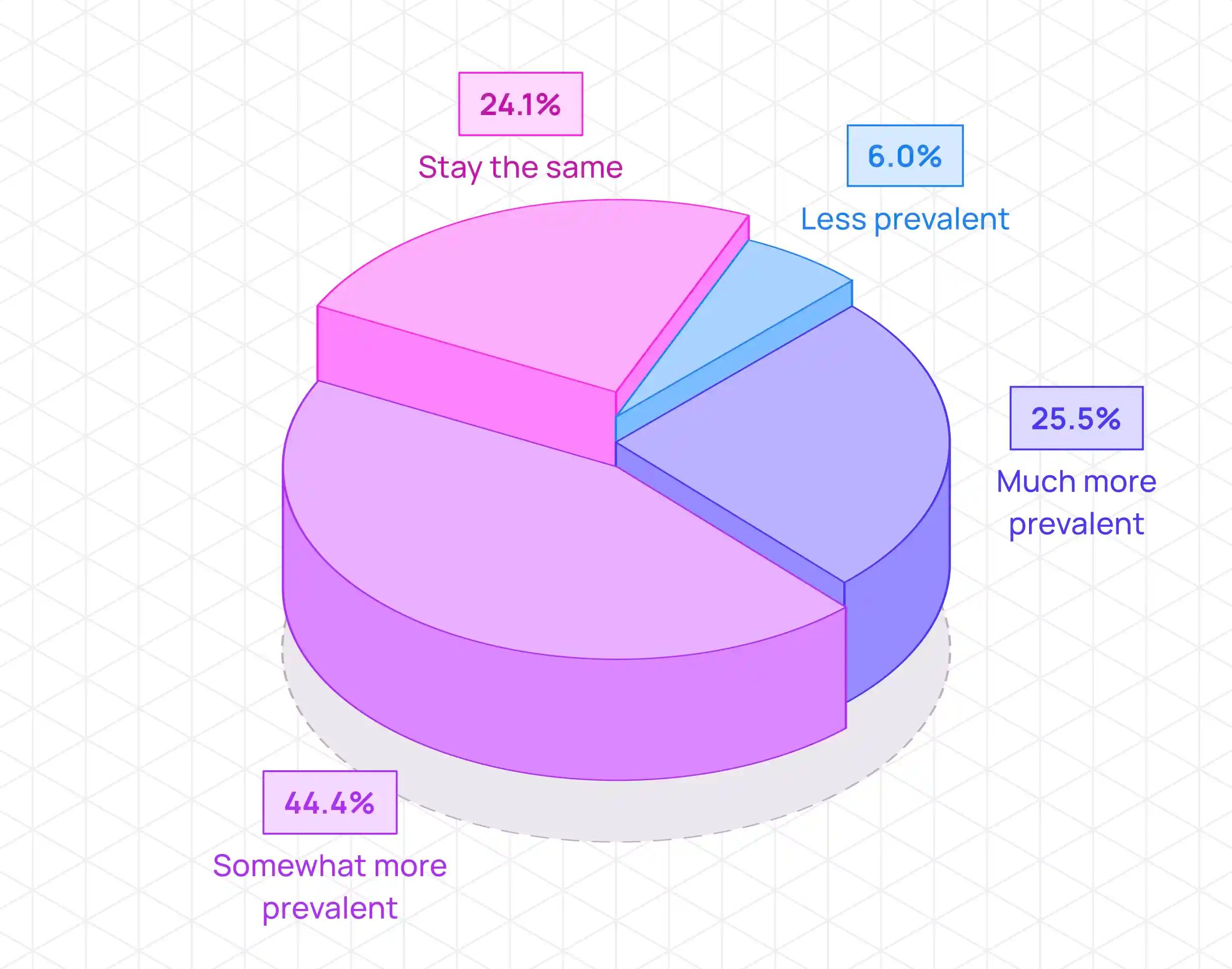
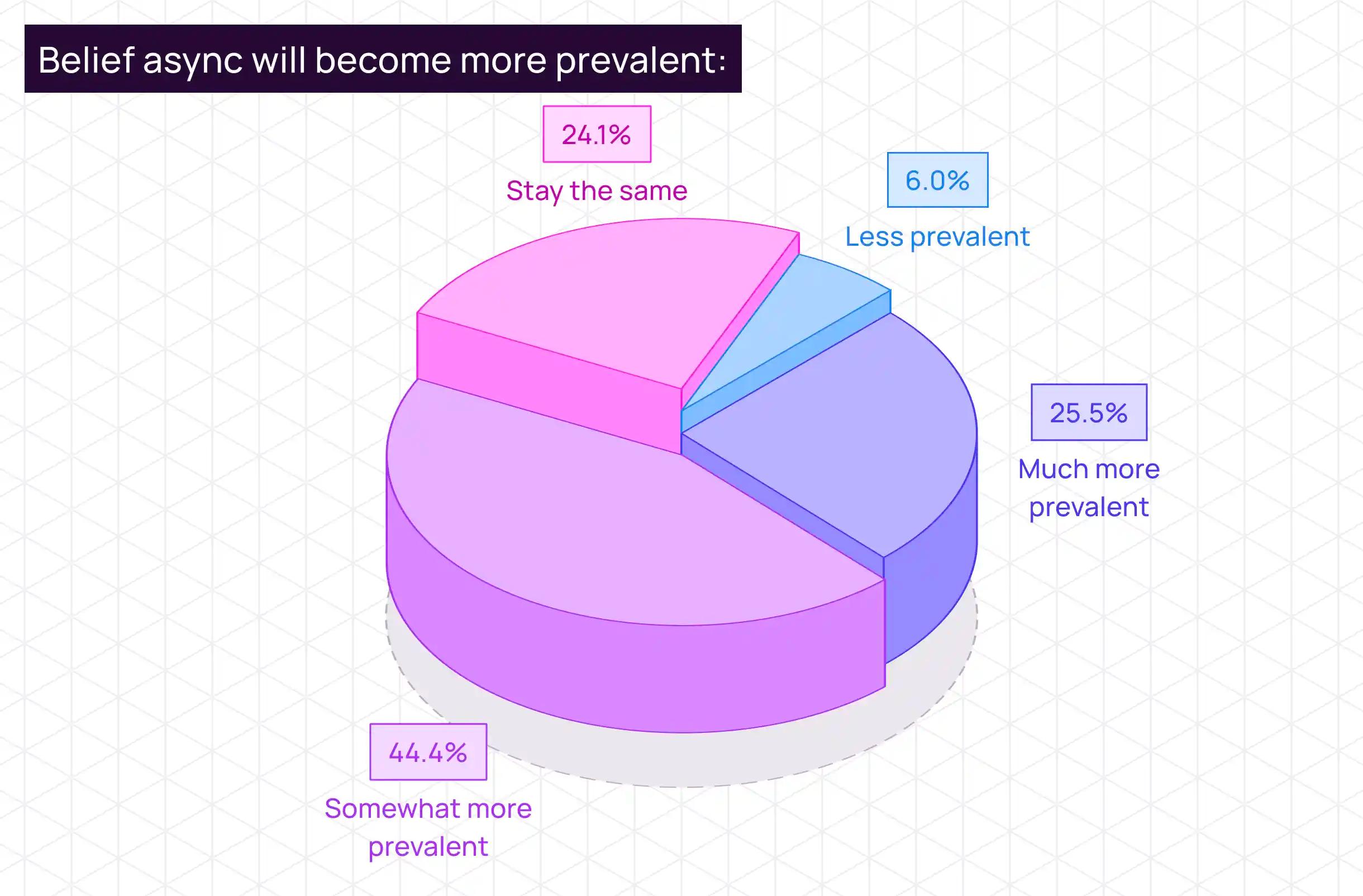
Most workers expect adoption of async practices to grow in the future. Only 6% think async work will decline.
Additional findings
The bottom line
The balance between async and real-time work is still a tug-of-war. A surprising amount of the week is shaped by fast-moving decisions, constant coordination, and the quiet pressure to reply immediately. But teams that invest in strong async foundations, such as clear documentation, explicit norms, and protected focus time, can outperform those that don't.
Our findings show the real blockers to async aren't the tools but how teams communicate - the lack of clear norms like communication guidelines and response expectations, the habits they reinforce, and an inability to say no to unnecessary meetings.
So is async the future? Given the productivity gains and the way AI is reshaping how we consume information, think, write, and collaborate, most workers believe it is. The open question is whether organizations are ready to support that shift, not just by choosing the right tools, but through how they lead, communicate, and make decisions.
*State of Async Work 2026 is based on 216 survey responses from knowledge workers across different roles, company sizes, and work arrangements. Survey conducted in 2025.