Brand
Get all logo versions.
Download 


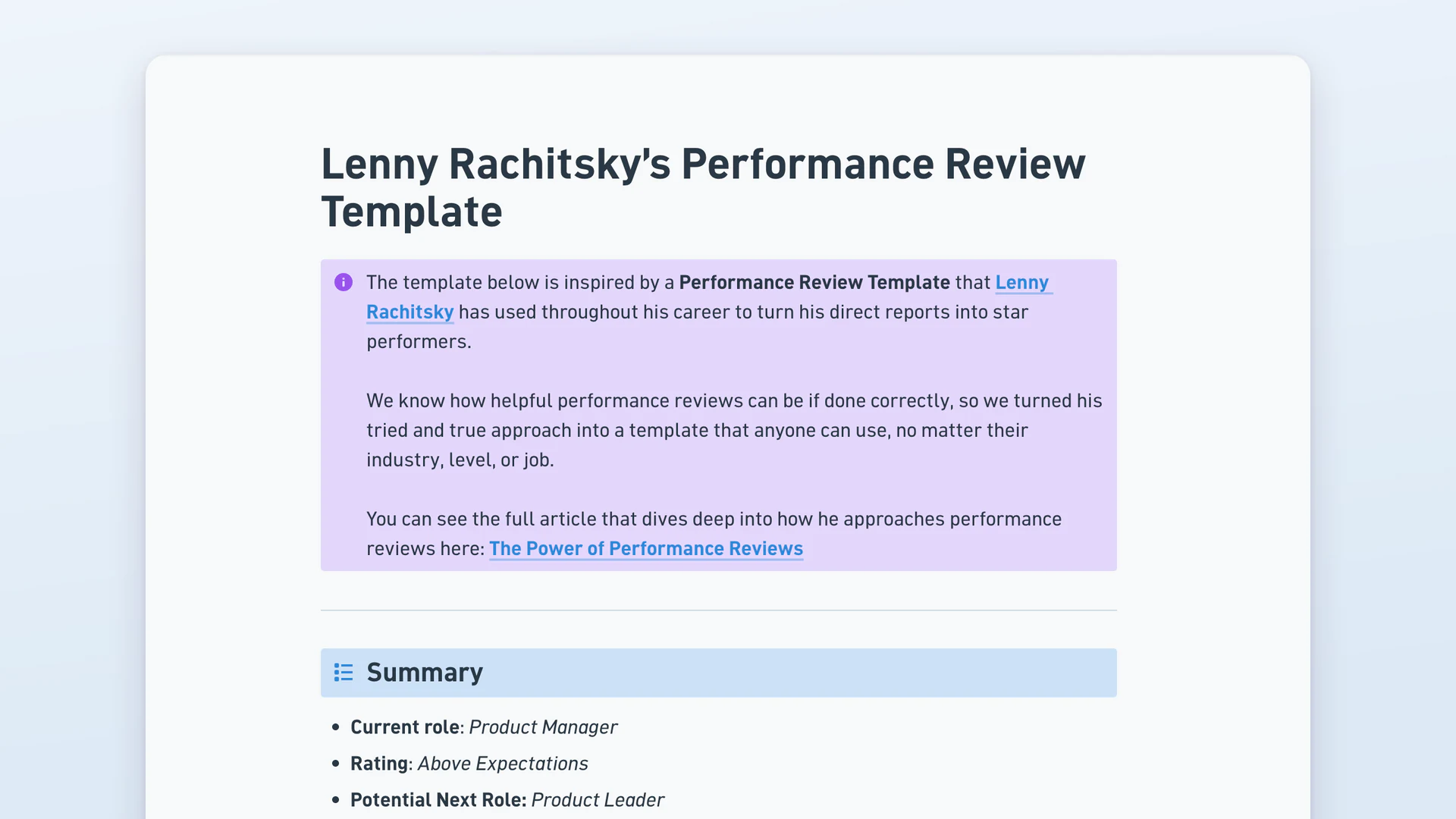
A performance review is a manager's written assessment of someone's work over a period: what they achieved, how peers experienced them, and what to improve next. This template has a summary with a rating and a potential next role, numbered accomplishments and peer feedback, a superpower section, and two development areas broken into examples, suggestions, and what excellence looks like. Managers use it for annual and quarterly cycles.
A performance appraisal measures results against objectives, usually through a rating scale, and feeds decisions about pay and promotion. A performance review is broader and more developmental: it covers the same results but adds peer feedback, strengths and the areas to work on next, and it's built for a two-way conversation. Many companies use the words interchangeably. Where they separate them, the appraisal is the score and the review is the discussion.
A performance review is a manager's written assessment of an employee's work over a set period, usually a quarter, half or year. It records what the person achieved, how colleagues experienced working with them, a rating against expectations, and the areas to develop next. Most companies pair the written doc with a conversation where both sides discuss it.
Say what happened, then what it means. Name specific work from the period rather than general impressions, quote peer feedback where you have it, and give a clear rating instead of hedging. For each development area, describe a real moment where the person fell short and a concrete suggestion for next time. Vague comments give someone nothing to act on.
Four questions cover most of it. What did this person accomplish? How do their colleagues describe working with them? What is the one strength they lean on most? And what two things should they focus on next, with examples. A review that answers those leaves the person knowing where they stand and what to do about it.
A summary is four lines, not a paragraph. On this template it reads: current role, Product Manager. Rating, Above Expectations. Potential next role, Product Leader. Role timeline, 12 months. The evidence lives below it in accomplishments and development areas. A good summary is readable in ten seconds and doesn't soften the rating.
Annual reviews are still the most common, with many companies running a lighter quarterly check between them. Quarterly cycles catch problems while they're small; annual ones carry more weight because promotion and compensation usually hang off them. New hires often get a review at 30, 60 and 90 days, which uses the same structure over a shorter period. The same structure carries a leadership performance review, where the development areas tend to be about scope and judgement rather than craft.