Brand
Get all logo versions.
Download 


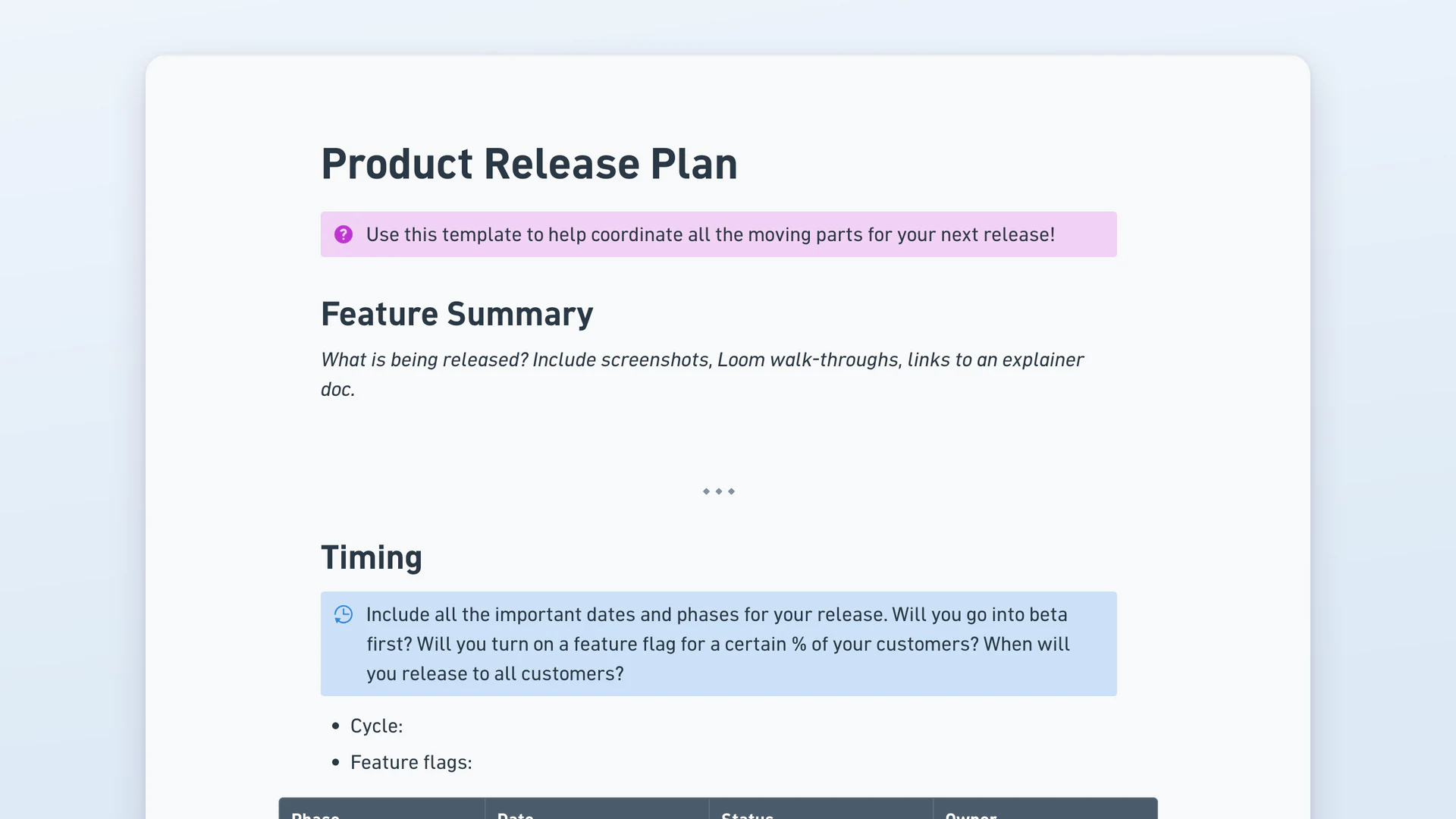
A product launch plan is the document that coordinates everyone shipping a release: what's going out, when each phase lands, who owns which part, and what has to be signed off first. This template has a feature summary, a phase table with dates and owners, named contacts across six teams, a feedback channel, and a coordination checklist split by engineering, product, CX and security. Product managers run releases from it.
A product roadmap shows what a team intends to build over the coming quarters, at the level of themes and initiatives, and it changes as priorities move. A release plan covers a single release in detail: the exact phases, dates, owners and sign-offs needed to get one piece of work in front of customers. The roadmap says what's coming. The release plan gets one item of it out the door.
A release plan is the coordination document for shipping a specific piece of work. It records what's being released, the phases and dates it goes out in, who owns each phase, and what every team has to finish first. Release plans cover one release. A roadmap covers many, at a much coarser level of detail.
Start with what's actually shipping and write it plainly, because half the coordination problems come from people having different ideas about scope. Then phase the rollout: internal beta, a percentage of customers behind a flag, then everyone. Give each phase a date and an owner. Last, work through what each team needs to finish, and name where feedback goes.
Take a two-factor authentication release. Feature summary: TOTP setup in account settings, with a link to the spec. Phases: internal beta on the 3rd, 10% of accounts on the 10th, everyone on the 24th, each with a named owner. Teams: engineering finishes the recovery code flow, CX writes the help article, security signs off the threat model.
Split it by team rather than making one long list. Engineering covers the flag, the rollback path and monitoring. Product confirms scope and the phase dates. CX needs help documentation and a support macro. Security signs off before the flag opens. Anything that doesn't fit those four goes in an other column, which is usually legal or finance.
It's built for one. The cycle and feature flag lines assume you can release to a percentage of accounts and widen it, which is how most SaaS releases work. That phasing is your release strategy in practice: how wide you go, and how fast. A project rollout plan or implementation plan for internal software uses the same structure, with phases mapped to environments instead of customer percentages.