Brand
Get all logo versions.
Download 


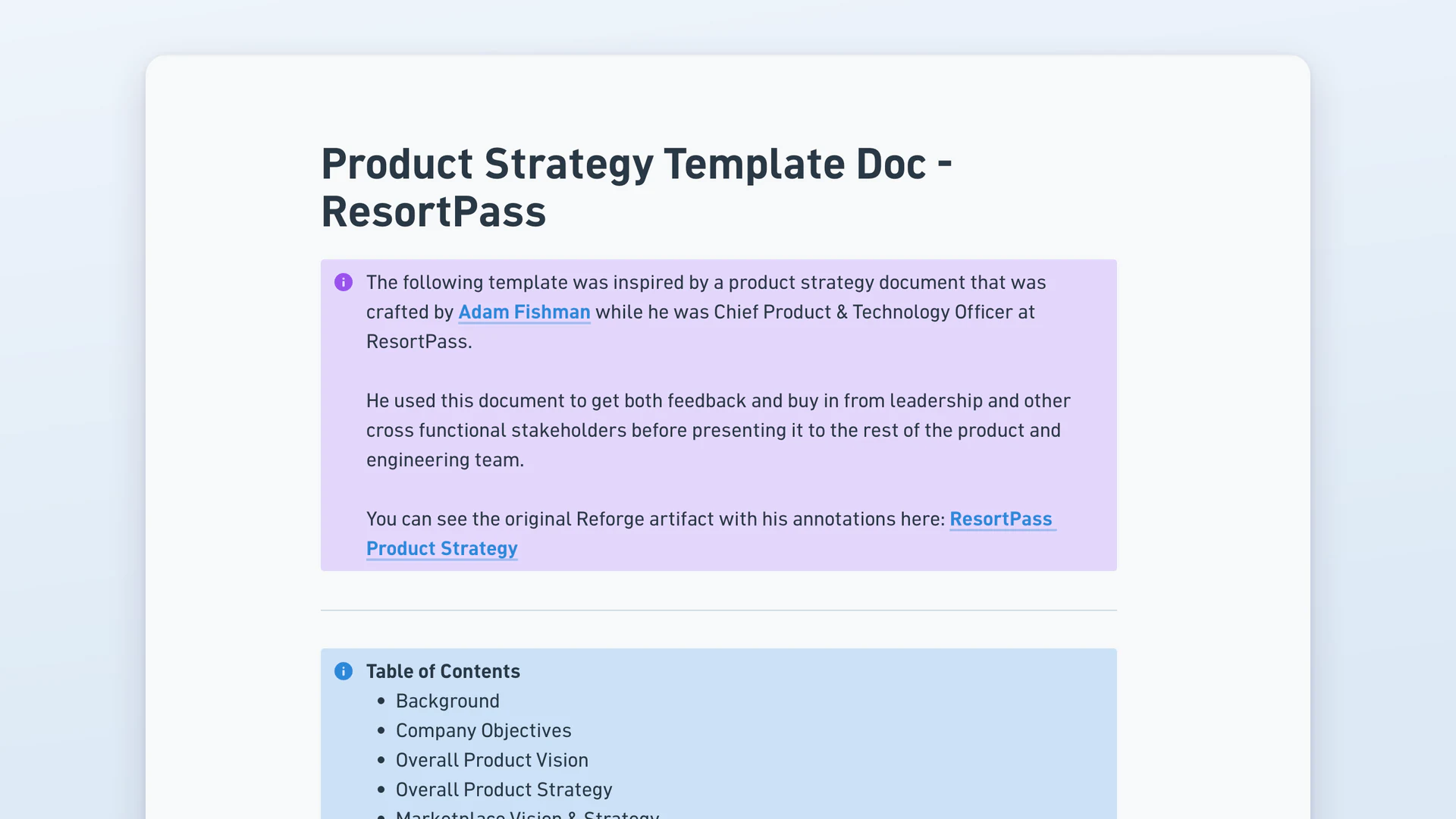
A product strategy sets out where a product is going and why, connecting company objectives to a vision and a sequence of bets. This template runs background, company objectives, an overall product vision and strategy, then a separate vision and strategy for each market you serve, and closes with a proposed multi-year plan. Product leaders write it to get buy-in from executives before taking it to the team.
A product strategy says where the product is going and why: the vision, the markets, and the bets you're choosing between. A product roadmap says when the work happens, as a sequence of initiatives with dates. Strategy is stable and usually revisited once a year; roadmaps shift every quarter. Without a strategy behind it, a roadmap is a feature list. If you need the scheduling artifact instead, start from the product roadmap template.
Product strategy is the plan for where a product is going and how it will get there: the vision for the product, the markets it serves, the bets you're making, and the order you'll make them in. It sits between company objectives above and the roadmap below. A strategy explains why the work matters; a roadmap schedules it.
The doc this template comes from was written at ResortPass, which sells day access to hotel pools and spas. It splits into two markets: a consumer marketplace and a B2B side selling to hotels, each with its own vision and strategy, because growing supply and growing demand need different bets. A software company might split by self-serve and enterprise the same way.
Start from company objectives, not from feature ideas. Write the product vision as a destination, then name the two or three bets that move you toward it. Break the strategy down per market if you serve more than one, since segments rarely need the same thing. Then sequence the bets across years and circulate the doc for comment before presenting it.
Most frameworks cover the same five things: background on the current situation, the company objectives the product serves, a vision for where the product is heading, the bets that get you there, and a timeline. A product development strategy is the same document read from the build side, concerned with how the bets get made rather than which ones you picked.
Digital product strategy covers software and online products, where you can ship, measure and change direction inside a quarter. The document structure stays the same: objectives, vision, strategy, markets, sequencing. What changes is the cadence. A physical product locks its multi-year plan early; a digital one revisits sequencing each planning cycle as usage data arrives.